
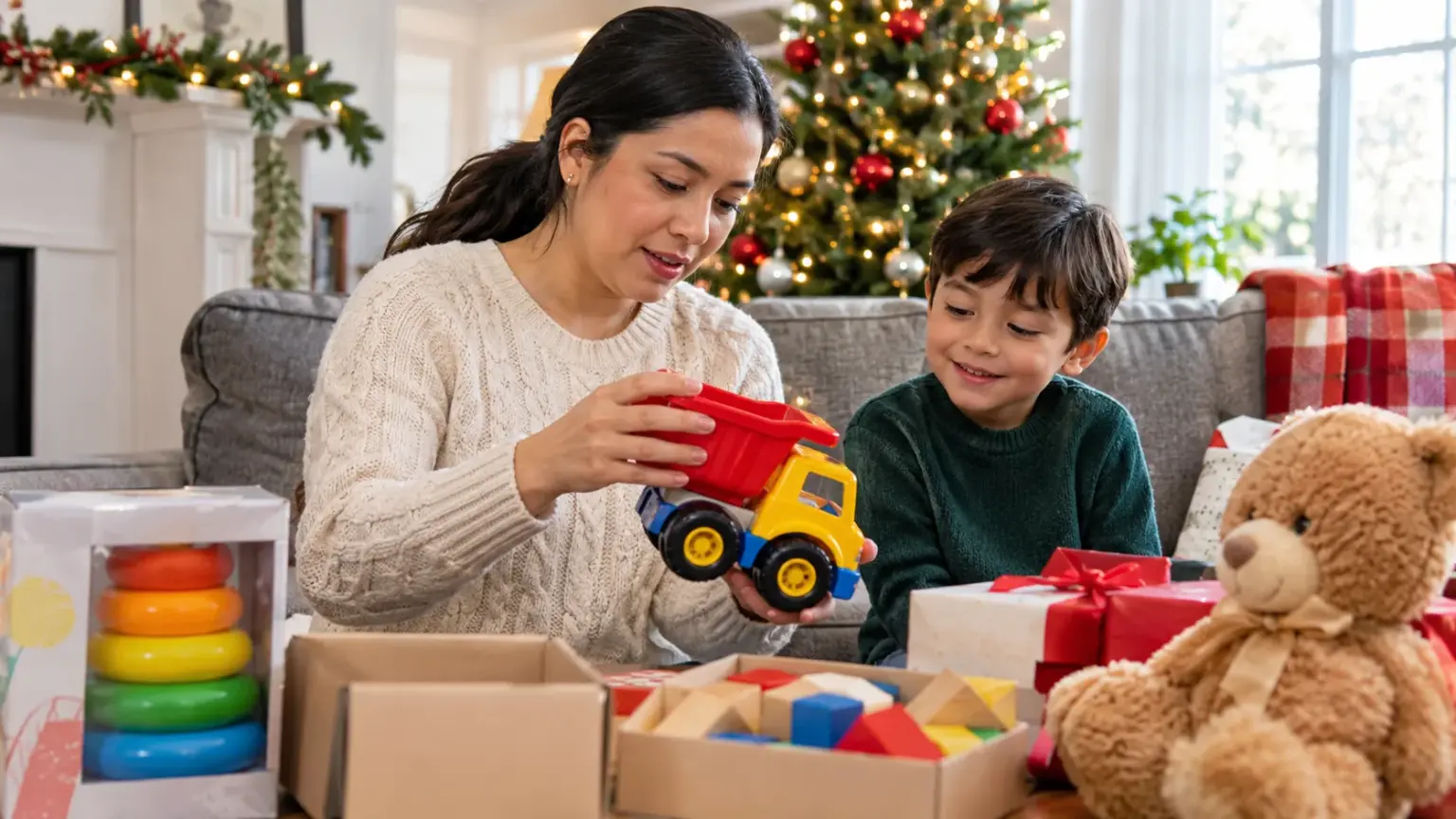
Holiday shopping often begins with a child’s wish list, a popular character, or a toy trending online. But an exciting-looking gift can carry risks that are difficult to see in a product photo. Loose magnets, accessible button batteries, small detachable pieces, and unusual fillings can turn an ordinary plaything into an emergency.
Holiday toy safety deserves special attention in 2026. November is Toy Safety Awareness Month, and federal regulators have issued new water bead requirements and warnings about counterfeit squishy toys. Families can make more informed choices by checking toys before purchase, inspecting gifts after they are opened, and reviewing product recalls regularly.
For additional prevention advice, explore our Child Safety resources and Home Safety guides.
Why Toy Safety Is a Major Holiday Concern in 2026
On November 2, 2026, The Toy Association launched its annual Toy Safety Awareness Month campaign, highlighting counterfeit products, squishy toys, age labels, and recall checks. Earlier in the year, the U.S. Consumer Product Safety Commission (CPSC) announced a new federal safety standard for water bead toys.
These developments do not mean all new toys are dangerous. They do show why shoppers should evaluate the specific product and seller rather than assume a familiar photograph or a low price proves safety.
Take Age Labels Seriously
Age recommendations provide more than suggestions about whether a child will enjoy a toy. They can signal choking concerns, developmental needs, and the level of supervision a product requires. A toy marketed to older children may contain small components that are unsafe around a toddler.
The CPSC’s toy safety guidance recommends keeping small parts and small balls away from children younger than three. It also advises keeping uninflated or broken balloons away from children younger than eight.
When buying for a household with children of different ages, think about who else may reach the toy. Store an older sibling’s building sets, game pieces, or craft supplies where younger children cannot access them.
Watch for Water Beads Hidden Inside Squishy Toys
Some soft, squeezable toys contain small water-absorbing beads. If the outer shell tears, those beads can spill onto floors or furniture and become difficult to find. A young child may swallow a bead without anyone noticing. Water beads can expand after contact with moisture and may cause dangerous internal blockages.
A new CPSC water bead standard took effect March 12, 2026. It sets limits on expansion, restricts certain chemical content, and requires warnings and testing for covered toys manufactured after that date. The requirements do not make every old water bead product safe, and some products marketed for other purposes fall outside the rule.
Keep water beads out of areas used by young children. Do not give a child a squishy toy that is leaking, splitting, or exposing its filling. If beads spill, prevent access and thoroughly collect the scattered material.
Avoid Counterfeit and Unsafe Squishy Toys
In August 2026, the CPSC warned about fake and counterfeit squishy toys sold through online marketplaces, social platforms, and other retailers. Some may lack required testing, manufacturer details, age information, or safety warnings.
The agency also warned against a social-media trend involving heating squishy toys. Never heat, microwave, cut open, or deliberately burst one. Toy contents may be hazardous, and heat may cause burns or other injuries.
Before buying, check whether the seller identifies the actual manufacturer and gives clear product information. Be cautious with listings that use copied-looking photos, vague brand names, or missing warnings.
Keep High-Powered Magnets Away From Children
Magnetic building toys and novelty sets can look harmless because the pieces are colorful and small. However, loose high-powered magnets present a serious ingestion hazard. If more than one magnet is swallowed, they may attract each other across different sections of the digestive tract and damage internal tissue.
The CPSC explains the dangers of swallowed high-powered magnets and advises immediate medical attention when ingestion is suspected. In September 2026, the agency announced a recall of magnetic stick-figure sets after reports of children removing and swallowing magnets.
Inspect magnetic toys for cracks or loose pieces. Avoid sets that shed magnets, and keep them inaccessible to young children. If swallowing is suspected, seek emergency medical care even if no symptoms have appeared.
Inspect Button Battery Compartments
Light-up toys, talking books, electronic decorations, remotes, and novelty items may use button or coin batteries. Swallowing one can cause severe internal burns. A battery that appears used up may still be dangerous.
Choose products with secured battery compartments that cannot be opened easily by a child. Adults should handle battery changes, put away replacement cells immediately, and secure the compartment after every change. The CPSC’s button battery guidance describes child-resistant design and warning requirements, including requirements for covered toys and consumer products.
If a child may have swallowed a button battery, seek emergency medical attention immediately. Do not wait for symptoms or try to retrieve the battery at home.
Check Rechargeable Toys and Chargers
Remote-controlled vehicles, electronic toys, and ride-on products may contain rechargeable battery packs. Purchase replacements and chargers recommended by the manufacturer, and inspect cables for damage. An unusually hot, swollen, leaking, or damaged battery should not be charged or used.
Charge toys according to their instructions and away from bedding, paper, and other combustible materials. Parents can find more information in our guide to preventing lithium-ion battery fires at home.
Look Beyond Small Parts to Cords and Sharp Edges
Toys may also contain long strings, brittle plastic, exposed wires, sharp corners, or detachable decorations. Examine stuffed animals for loose eyes, buttons, seams, and stuffing. Remove broken toys from use rather than expecting a child to avoid the damaged area.
The American Academy of Pediatrics’ toy buying guide advises choosing sturdy, age-appropriate products, avoiding sharp parts, and checking that plush toys are well made. Babies and toddlers need particular protection from choking and strangulation hazards.
Make Riding Toys Safer
Scooters, bicycles, skateboards, and other riding gifts may require additional safety equipment. Choose a correctly sized product, provide an appropriate helmet, and supervise younger riders. Teach children where riding is permitted and why traffic, driveways, and steep slopes require care.
Do not assume a product is suitable simply because it can be ridden. Match the child’s ability to the toy and follow instructions about protective gear. See our Road Safety articles for additional transportation precautions.
Check Recalls Before and After Buying
A toy can be recalled after it reaches stores or arrives in a home. Check the CPSC recall and product safety warning database, especially for unfamiliar brands, older gifts, secondhand toys, and products purchased through marketplace sellers.
For example, an October 1, 2026 CPSC recall of certain squishy toys cited water bead ingestion hazards. Check the specific model and description before assuming any similar-looking product is affected.
If you own a recalled toy, stop using it and follow the official remedy instructions. Do not donate or resell an unsafe product.
Inspect Gifts Before Children Start Playing
Holiday mornings can be crowded and exciting. Once presents are opened, adults should remove plastic wrapping, ties, bags, and other packaging promptly. Examine battery doors, toy seams, detachable accessories, and instructions before handing the item to a child.
Keep older children’s small components in separate containers. Recheck toys after a few days of play because parts can loosen or break. Review our child accident prevention guides for broader household safety practices.
What to Do if a Child Swallows a Hazardous Toy Part
If you suspect a child swallowed a button battery, high-powered magnet, or water bead, seek emergency medical evaluation immediately. Do not wait for coughing, pain, vomiting, or other symptoms to develop. Tell clinicians what item may have been swallowed, and bring product packaging or a matching item if it is readily available and safe to bring.
For other choking emergencies, call emergency services and provide age-appropriate first aid if trained to do so. Avoid blind finger sweeps, which can push an object deeper.
Make Holiday Toy Safety a Family Habit
The safest gift is one that fits the child’s age, abilities, and home environment. Buy from identifiable sellers, read warnings, watch for water beads and strong magnets, secure button batteries, and keep small parts away from younger children. Check recalls before gifting and periodically afterward.
November’s Toy Safety Awareness Month provides a timely reminder, but responsible toy selection continues all year. Explore more guidance through our Home Safety category and the AccidentsPrevention.org blog.