
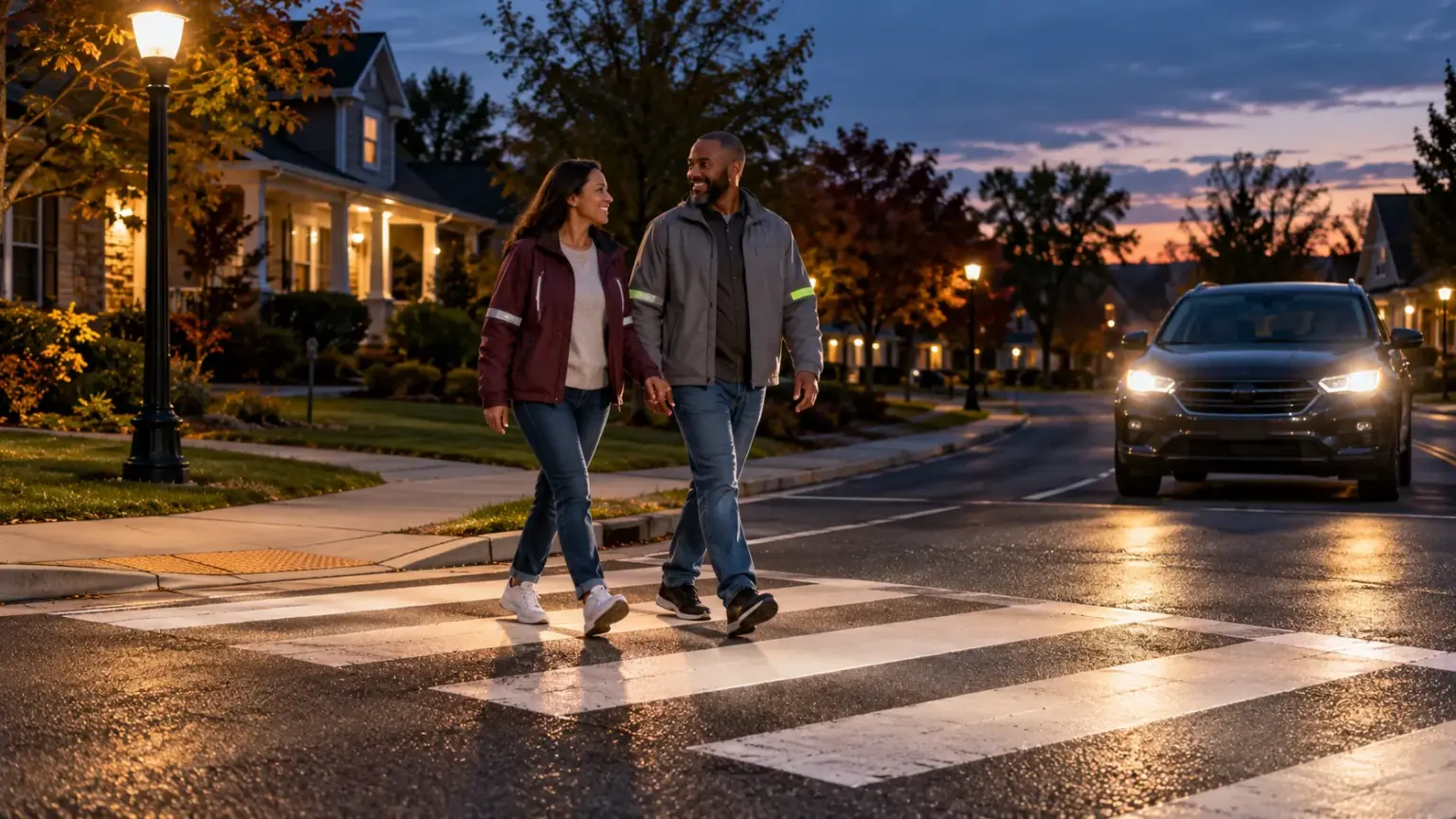
Walking after sunset is part of everyday life. People leave work, visit stores, exercise, walk dogs, or head to a bus stop long after daylight fades. Yet darkness can make it harder for drivers to detect pedestrians and judge their movements, especially at crossings, on roads with limited lighting, and near parked vehicles.
October is National Pedestrian Safety Month, an opportunity to focus on nighttime pedestrian safety throughout the year. According to the National Highway Traffic Safety Administration (NHTSA), 76% of U.S. pedestrian traffic fatalities in 2024 occurred in dark conditions. That figure highlights a serious problem, although it does not mean darkness alone caused those crashes.
Safer streets require attention from drivers, people walking, and the agencies responsible for lighting and road design. Explore related information in our Pedestrian Safety category and Road Safety guides.
Why Are Pedestrian Crashes So Dangerous After Dark?
Low light reduces contrast, making people, dark clothing, and roadside obstacles harder to distinguish from the background. Rain, glare, curves, dirty windshields, and parked vehicles can add to the challenge. A driver may not recognize someone near a crosswalk until the vehicle is too close to stop comfortably.
The University of California, Berkeley SafeTREC’s October 2026 pedestrian safety update highlights the 2024 nighttime fatality statistics and encourages extra care as evenings become darker. Communities also need to consider vehicle speeds and road design rather than placing responsibility solely on pedestrians.
Choose Sidewalks and Predictable Walking Routes
When possible, select streets with continuous sidewalks, working lights, visible crossings, and lower vehicle speeds. A slightly longer route may offer more reliable separation from traffic than a shortcut along an unlit road shoulder.
If no sidewalk exists, NHTSA recommends walking facing traffic and as far from moving vehicles as possible. Remain alert around driveway entrances and parking lots, where vehicles can approach from unexpected directions. If a route routinely feels unsafe, consider an alternative or report the issue to local transportation officials.
Be Visible Without Assuming Drivers Can See You
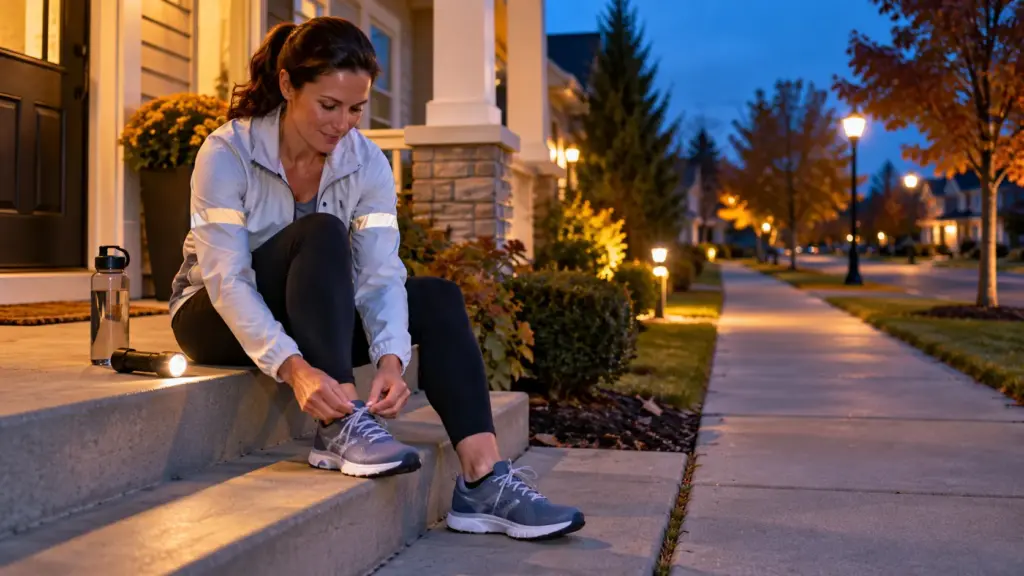
Light-colored outerwear, reflective strips, and reflective accessories can help a person stand out in headlights. A small flashlight can illuminate uneven pavement and make a walker easier to notice. For people who exercise after dark, reflective details on moving arms or legs may add useful visibility.
Visibility aids are supplements, not guarantees. A driver still needs to use an appropriate speed and watch for people who may not have reflective clothing. Walkers should avoid stepping into a vehicle’s path based only on the assumption that they have been seen.
Cross at Well-Lit Intersections When Available
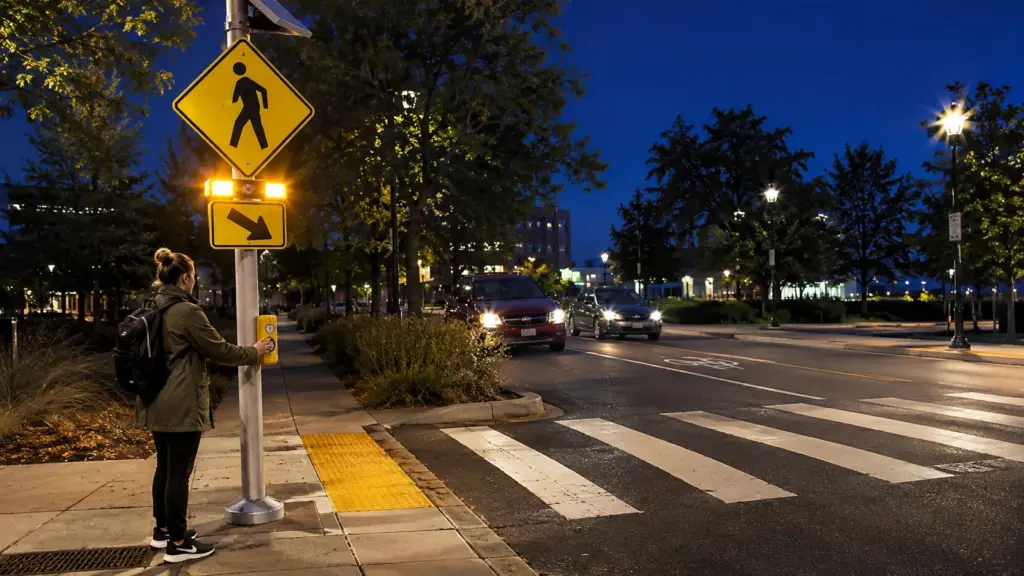
Before crossing, stop at the curb, scan for vehicles in every relevant direction, and watch for turning traffic. Use crosswalks or intersections whenever available and follow pedestrian signals. A walk signal does not remove the need to check for a vehicle that may turn through the crossing.
The NHTSA pedestrian safety guide advises choosing a well-lit location with clear views when a designated crossing is unavailable. Wait for a gap that provides adequate time to cross and keep checking traffic throughout the crossing. Never assume an approaching vehicle will stop.
Remember That Intersections Are Not the Only Risk
People cross between bus stops, stores, apartments, and parking areas, often where no traffic signal exists. NHTSA reports that 73% of pedestrian fatalities in 2024 occurred at locations that were not intersections. That makes midblock roads, driveways, and shoulders important areas for prevention.
Drivers should look beyond marked crosswalks, especially near transit stops, restaurants, shopping areas, and residential buildings. Pedestrians should avoid emerging suddenly from between parked vehicles, which can block mutual visibility.
Drivers Should Reduce Speed Before Visibility Becomes Limited
A posted speed limit is not a promise that every condition is safe at that speed. At night, drivers need enough distance to recognize a person, decide what to do, and brake. Slowing down in residential areas, near transit stops, and around crosswalks gives everyone more time.
The AAA Northeast’s October pedestrian safety guidance emphasizes lower speeds, eliminating distractions, and exercising caution after sunset. Drivers should be particularly careful when a car in the adjacent lane has stopped near a crossing: it may be yielding to someone who is not yet visible.
Keep Headlights Clean, Properly Aimed, and Used Correctly
Headlights help drivers see the road, but their performance varies considerably. Dirty lenses, incorrect aim, damaged bulbs, and windshield glare can reduce visibility. Use low beams appropriately around other road users, and never substitute daytime running lights for required nighttime lighting.
The Insurance Institute for Highway Safety (IIHS) reports that vehicles with good-rated headlights have been associated with fewer nighttime pedestrian crashes than vehicles with poor-rated headlights. Better equipment helps, but attentive driving and appropriate speed are still essential. Our article on ADAS calibration after windshield replacement explains another aspect of maintaining modern safety systems.
Take Extra Care When Turning or Backing Up
Turning drivers may focus on oncoming traffic and overlook a person entering a crosswalk. Slow before the turn, look across the full width of the crossing, and yield as required. Do not stop on the crosswalk while waiting for a gap.
Backing out of a driveway or parking space requires a similarly careful scan. Mirrors, cameras, and sensors can assist, but they may not reveal every pedestrian or obstacle. Check carefully and move slowly, particularly near apartment buildings, stores, and transit stops.
Prevent Distractions on Both Sides of the Road
Drivers should finish entering navigation destinations and put phones away before moving. Eating, adjusting screens, and talking to passengers can also divert attention from the road. Pedestrians can improve their awareness by pausing in a safe place before checking messages or maps.
Headphones that block surrounding traffic sounds may make it harder to notice approaching vehicles. Neither pedestrian attentiveness nor technology replaces the driver’s duty to watch for people. For additional information about vehicle-based assistance, see our article on AI dashcams and road accident prevention.
Plan for Rain, Glare, and Changing Daylight
Wet pavement can reflect headlight glare and make painted markings harder to distinguish. Falling leaves, fog, and early darkness may further complicate visibility during autumn. Drivers should reduce speed and increase following distance when these conditions appear.
Walkers should use stable footwear, watch for slick surfaces, and consider routes with dependable lighting. Families who walk to seasonal events can also review our Halloween safety tips for kids and drivers for event-specific planning.
Consider Children and Older Adults
Children may have difficulty estimating vehicle speed and gaps in traffic. Adults should practice safe crossings with them and provide supervision appropriate to their age and ability. Older adults and people using mobility aids may need additional crossing time, even when the signal has changed.
Drivers should avoid rushing anyone already in a crosswalk. Communities can help by providing accessible curb ramps, longer crossing intervals where justified, and well-placed lighting. Nighttime safety should work for everyone, including people with limited vision or mobility.
Better Street Design Makes a Lasting Difference
Safety cannot depend on perfect attention from every person on every trip. Adequate lighting, narrower crossings, pedestrian refuge islands, slower vehicle speeds, and clearly marked crossing points can reduce conflicts.
The Federal Highway Administration (FHWA) highlights how appropriate crosswalk lighting and visibility treatments can improve pedestrian detection. Its rectangular rapid flashing beacon guidance explains how pedestrian-activated lights can increase driver awareness at suitable crossings. These features must be chosen and installed appropriately for the location.
Make Nighttime Pedestrian Safety an Everyday Habit
Before an evening trip, walkers can check the route, choose sensible visibility aids, and identify appropriate crossing points. Drivers can clean headlights and windshields, put away distractions, slow near pedestrian activity, and look carefully when turning or backing.
October’s National Pedestrian Safety Month offers a reminder, but safer walking after dark is a year-round responsibility. Combining thoughtful driving, predictable crossing behavior, accessible sidewalks, and well-designed streets can make ordinary evening trips less hazardous. Browse more articles in our Pedestrian Safety category or the AccidentsPrevention.org blog.