
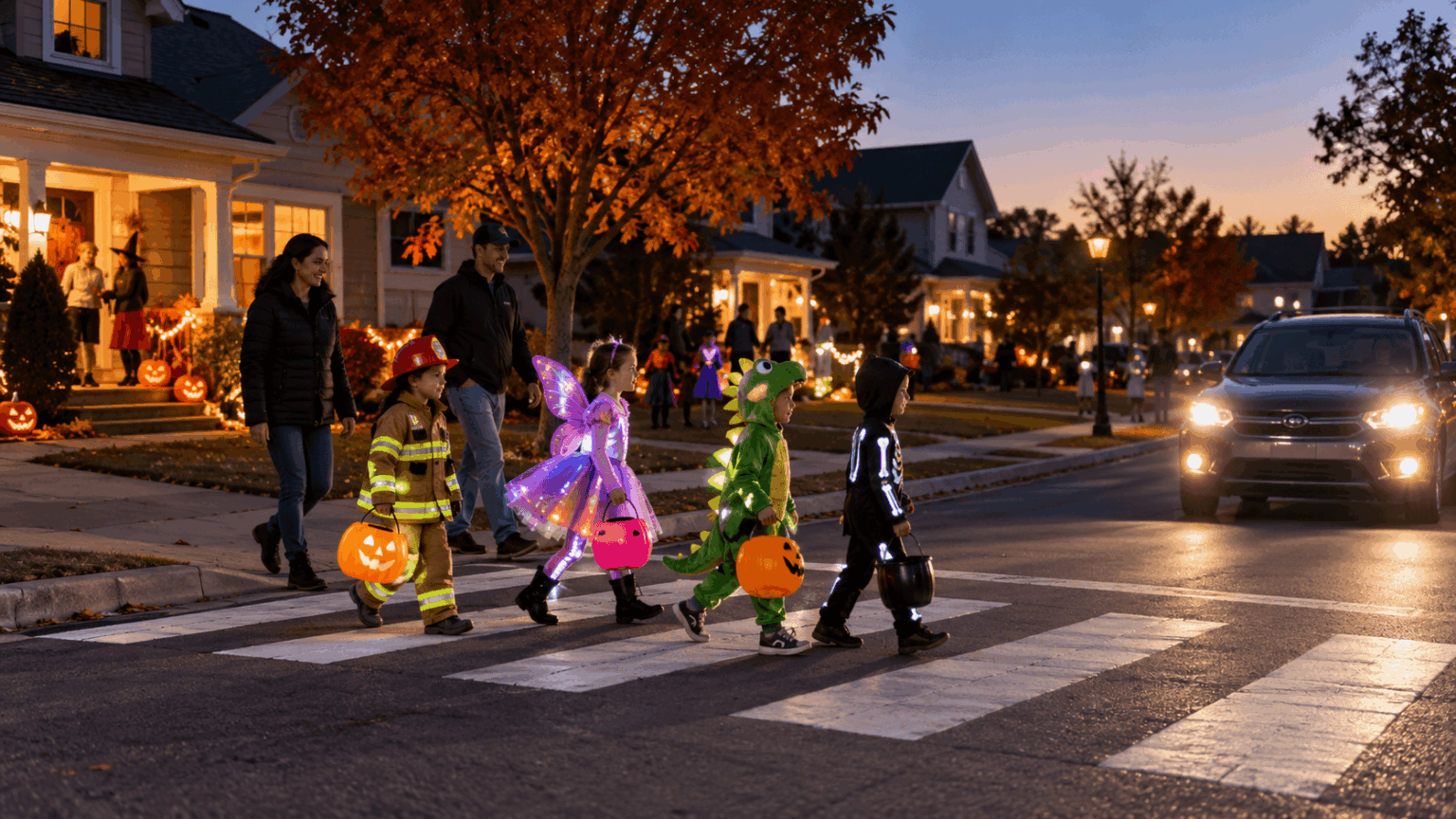
Halloween brings costumes, decorations, neighborhood gatherings, and large numbers of children walking outdoors after dark. That combination can make October 31 different from an ordinary evening for both pedestrians and drivers. Children may cross unfamiliar streets, move between parked vehicles, wear costumes that reduce visibility, or become distracted by friends and treats.
Drivers may also encounter far more pedestrians than usual in residential neighborhoods, particularly around dusk and during popular trick-or-treating hours. Preparing children before they leave home and adjusting driving habits can help reduce preventable injuries.
Families can find related guidance in our Child Safety, Pedestrian Safety, and Road Safety resources.
Why Halloween Requires Extra Pedestrian Awareness
Halloween creates unusual traffic conditions because many children are outside at approximately the same time, often after sunset. Excited trick-or-treaters may pay more attention to friends, costumes, decorations, or candy than approaching vehicles.
Safe Kids Worldwide reports that children are more than twice as likely to be struck and killed by a vehicle on Halloween than on an average day. The organization recommends improving visibility, crossing at appropriate locations, supervising younger children, and slowing down in residential areas.
The National Highway Traffic Safety Administration similarly reminds motorists that pedestrians may appear in unexpected places on Halloween. Drivers should slow down, scan carefully, and expect children to behave unpredictably.
Plan the Trick-or-Treating Route Before Leaving
Families should decide where children will walk before trick-or-treating begins. Choose familiar neighborhoods with sidewalks, adequate lighting, manageable traffic, and safe places to cross.
Planning the route reduces the chance that children will wander onto busier streets or take shortcuts through poorly lit areas. Parents of older children who are allowed to go without direct adult supervision should know the route, who is traveling with them, and when they are expected home.
Children should stay with their group rather than separating to reach homes more quickly. Establish a clear meeting point in case someone becomes separated.
These habits are similar to those discussed in our back-to-school travel safety guide, where route planning and predictable street-crossing behavior also play important roles.
Make Costumes Easier for Drivers to See
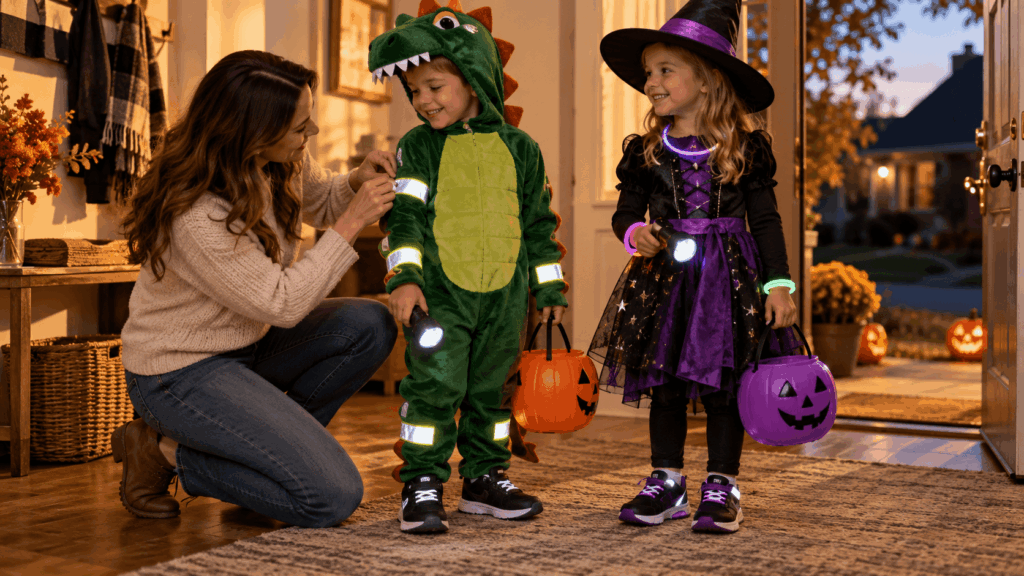
Dark costumes can become difficult for motorists to see after sunset. Families can improve visibility by adding reflective tape or reflective stickers to costumes, jackets, shoes, and treat bags.
Flashlights and glow sticks can also help children see walking surfaces and make them easier for drivers to notice.
The National Safety Council recommends reflective materials and visible accessories for children going out after dark.
Parents should think about visibility from every direction. A reflective strip on the back of a costume may help approaching drivers see a child who is walking away from them, while reflective material on the front and sides can improve visibility when crossing.
Choose Costumes That Reduce Trips and Falls
Halloween injuries are not limited to traffic crashes. Long costumes, oversized footwear, masks, stairs, uneven sidewalks, and decorations can contribute to trips and falls.
The U.S. Consumer Product Safety Commission has identified falls, costume-related incidents, pumpkin carving, and decorating injuries among common Halloween hazards.
Costumes should fit correctly and should not drag on the ground. Children should wear comfortable, secure shoes that allow them to walk normally.
Accessories such as swords, staffs, canes, or similar props should be soft and flexible rather than sharp or rigid. A child who falls while carrying a hard object could suffer an additional injury.
Avoid Masks That Block Vision
A costume mask may look impressive but can reduce peripheral vision or shift while a child walks. Poor visibility becomes particularly concerning near driveways and intersections.
HealthyChildren.org from the American Academy of Pediatrics recommends face paint or makeup when practical instead of masks that can obstruct a child’s view.
If a mask is used, parents should check that the eye openings allow the child to see clearly in front and to both sides. Have the child walk around indoors before leaving to determine whether the costume affects balance, hearing, or visibility.
Cross Streets at Corners and Crosswalks
Children should cross at corners, intersections, or marked crosswalks whenever possible rather than darting between parked vehicles.
Before entering the road, stop and look left, right, and left again. Continue watching for traffic throughout the crossing, including vehicles that may be turning.
The NHTSA pedestrian safety guidance recommends crossing at intersections or crosswalks, staying alert, and watching for vehicles entering or leaving driveways and parking areas.
Children should never assume a driver has seen them. Whenever practical, make eye contact with a driver and wait until the vehicle has completely stopped before crossing.
Do Not Cross Between Parked Cars
Parked vehicles can block visibility for both children and drivers. A child stepping suddenly from between vehicles may enter the travel lane before an approaching motorist has enough time to react.
This danger is greater with trucks, SUVs, vans, and other taller vehicles because they can create substantial visual obstructions.
Parents should repeatedly remind children that a shorter route across the street is not worth the risk. Walk to the next safe crossing point even when it requires additional time.
Put Phones Away While Walking
Older children and teenagers may use phones to take pictures, message friends, or check maps while trick-or-treating. Looking at a screen near traffic can reduce awareness of vehicles, driveways, cyclists, and other pedestrians.
Safe Kids Worldwide’s Halloween recommendations encourage children to put electronic devices down, keep their heads up, and walk rather than run while crossing streets.
Headphones can create similar problems when they block traffic sounds. If children carry phones for emergencies or communication, encourage them to stop in a safe location before using the device.
Supervise Younger Trick-or-Treaters
Young children may have difficulty judging how fast a vehicle is approaching or deciding when there is enough time to cross safely.
A responsible adult should accompany younger children and model safe pedestrian behavior. Walk with them rather than watching from a vehicle whenever possible.
Older children who are mature enough to travel without an adult should remain in groups, follow a planned route, and have a reliable way to contact a parent or caregiver.
Families can also review our child safety articles for additional strategies that help children recognize everyday hazards.
Drivers Should Expect Children Everywhere
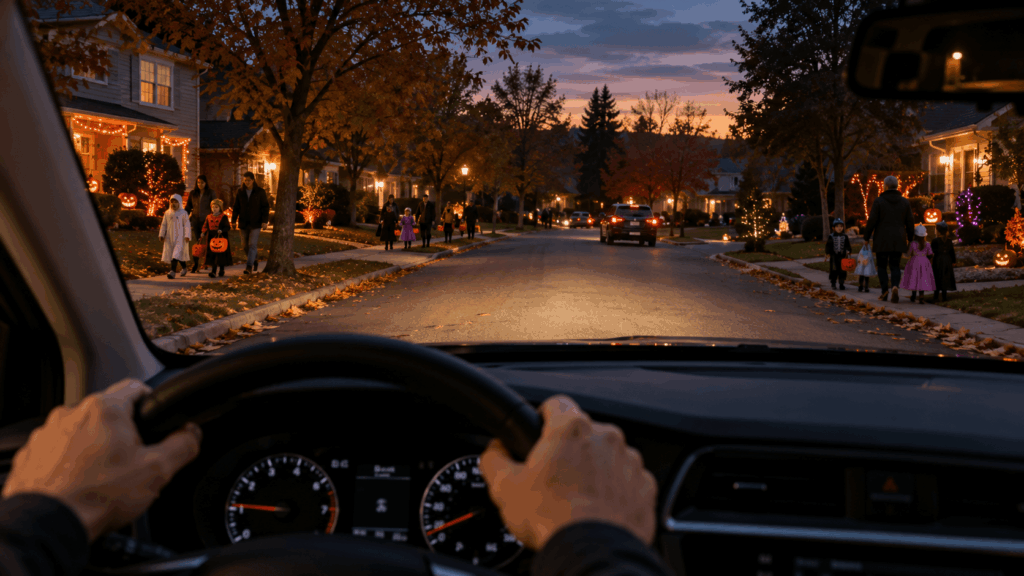
Motorists should approach Halloween neighborhoods differently from an ordinary evening commute. Slow down before entering residential areas and continually scan sidewalks, medians, driveways, parked vehicles, intersections, and road edges.
Children may suddenly change direction or cross outside designated areas. A slower vehicle speed gives the driver additional time to notice and respond.
NHTSA advises drivers to expect more pedestrians in unexpected places on Halloween and to watch carefully for younger trick-or-treaters who may not fully understand traffic dangers.
Turn Headlights On Early
Drivers should not wait until full darkness to turn on headlights. Twilight can make pedestrians difficult to distinguish from surrounding shadows even when there is still some natural light.
Using headlights earlier improves a driver’s view and makes the vehicle more visible to pedestrians.
Windshields, mirrors, cameras, and headlights should also be clean and unobstructed. Our Car Safety resources provide additional guidance on vehicle systems and habits that support safer driving.
Be Especially Careful Around Driveways
Driveways create an important Halloween hazard because children may walk across them while drivers are backing out.
Before moving a vehicle, walk around it when necessary and check the entire surrounding area. Use mirrors and backup cameras, but do not rely exclusively on technology.
Back out slowly and stop immediately if visibility is limited. Homeowners who do not need to drive during peak trick-or-treating hours may consider leaving vehicles parked until pedestrian activity decreases.
Keep Home Walkways Clear
Homeowners also play a role in Halloween accident prevention. Porch steps, sidewalks, and pathways should be free of objects that could cause visitors to trip.
Move garden hoses, bicycles, toys, extension cords, tools, and other objects out of walking areas. Sweep wet leaves from steps and repair or clearly illuminate uneven surfaces when possible.
Outdoor lights should be working before trick-or-treaters begin arriving.
For additional household accident prevention strategies, explore our Home Safety section.
Use Safer Alternatives to Open Flames
Traditional candles inside pumpkins and decorations can ignite costumes, dried leaves, paper decorations, or other combustible materials.
Battery-operated candles or glow sticks can create a similar visual effect without an exposed flame. If real candles are used, keep them far away from walking areas and never leave them unattended.
This is particularly important when children are wearing flowing costumes or carrying fabric treat bags.
Check Treats Before Children Eat Them
Children should wait until they return home or reach a supervised location before eating collected treats.
Parents and caregivers can inspect packaging and remove anything that appears opened, damaged, spoiled, or unsuitable for the child’s age.
Food allergies require additional planning. Children should understand which treats they should not eat, and caregivers may want to carry safe alternatives.
Young children should not receive candies, toys, or novelty items that create choking hazards.
Teen Drivers Need Extra Reminders
Halloween may place inexperienced teen drivers in neighborhoods crowded with pedestrians after dark. Parents should discuss the conditions before allowing a new driver to go out.
Teen drivers should reduce speed, put phones away, avoid carrying distracting groups of passengers, and remain especially alert near driveways and crosswalks.
HealthyChildren.org specifically recommends reminding teen drivers to slow down in neighborhoods and watch closely around parked cars, driveways, and alleys.
Plan Ahead for Halloween Parties
Halloween traffic safety also applies to adults attending parties. Alcohol and impaired driving create additional risks during the holiday.
NHTSA advises adults who plan to drink to arrange transportation before the celebration begins. A designated sober driver, taxi, rideshare service, public transportation, or overnight accommodation can prevent someone from making a dangerous decision later.
Party hosts can support safe transportation by offering nonalcoholic drinks and helping guests arrange rides home.
Make Halloween Fun Without Overlooking Safety
Halloween safety does not require taking the excitement out of the holiday. Most precautions involve simple habits: make costumes visible, choose a safe route, supervise younger children, cross at predictable locations, put phones away, and keep home walkways clear.
Drivers can contribute by reducing speed and expecting children to appear in places where pedestrians would not normally be present.
Because Halloween combines darkness, increased pedestrian activity, costumes, distracted children, and neighborhood traffic, preparation matters. A short safety conversation before trick-or-treating begins can reinforce habits children use throughout the year.
Explore more guidance in our Child Safety, Pedestrian Safety, and Road Safety categories, or browse the latest AccidentsPrevention.org articles.