
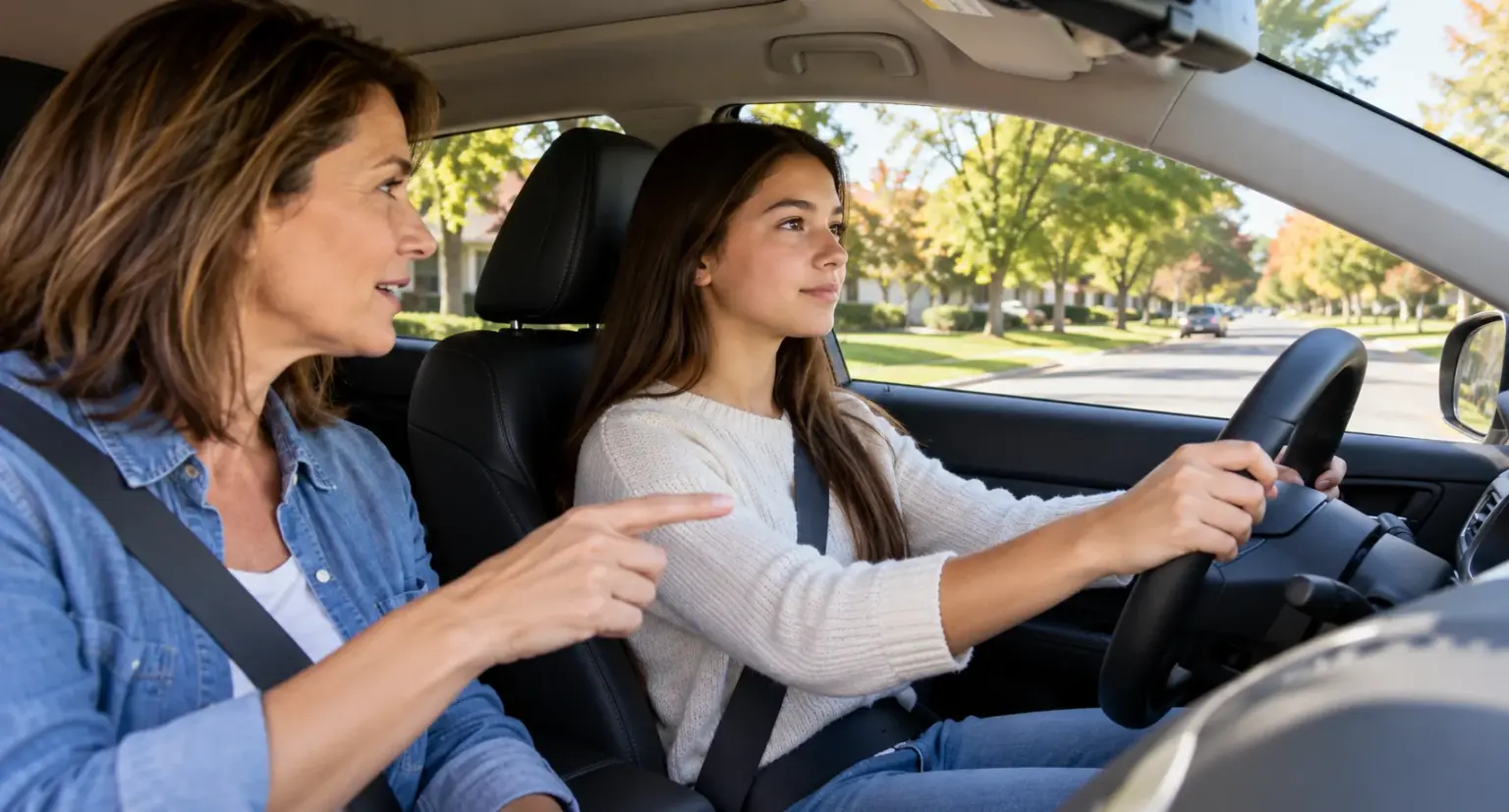
Getting a driver’s license is an exciting milestone, but a new license does not mean a teenager has experienced every challenge the road can present. Sudden stops, nighttime glare, unfamiliar intersections, distracted passengers, and bad weather all require judgment that develops through practice. Parents can help by setting expectations, supervising progressively harder drives, and keeping safety conversations open after a teen begins driving independently.
National Teen Driver Safety Week runs October 18–24, 2026. The National Highway Traffic Safety Administration (NHTSA) reports that 752 drivers ages 15–18 died in traffic crashes in 2024. Those figures provide a timely reason to review how families prepare new drivers. The following teen driver safety tips focus on practical steps that parents and teens can take together.
Understand Why New Drivers Face Greater Risks
Driving safely involves much more than remembering traffic signs. Experienced drivers continuously notice clues, predict hazards, maintain space, and adjust speed without much conscious effort. Beginners are still learning these skills, sometimes while also managing excitement or pressure from friends.
The Centers for Disease Control and Prevention (CDC) identifies inexperience as a major factor in teen crashes. Risks can increase when nighttime travel, passengers, distraction, or speeding are added. Parents should approach these risks as specific skills and situations to manage, not simply assume that confidence equals readiness.
Learn Your State’s Graduated Licensing Rules
All states and Washington, D.C., have graduated driver licensing (GDL) systems, although the details vary. These systems typically move a new driver through supervised learning, restricted independent driving, and full licensing. Intermediate restrictions may cover nighttime hours, passengers, or other high-risk situations.
Before handing over the keys, review the exact rules with your teen. Check official state motor vehicle agency instructions, and use the Insurance Institute for Highway Safety’s state licensing comparison as a starting reference. Where appropriate, family rules can be more cautious than the legal minimum. Explain which requirements are laws and which are additional household expectations.

Build Driving Experience in Manageable Stages
Start supervised practice where traffic is light and the environment is predictable. An empty parking lot, quiet neighborhood, or familiar daytime route can help a beginner practice smooth braking, turning, mirror checks, signaling, and lane positioning.
Gradually add busier roads, multilane intersections, highway merging, rain, and reduced-light conditions as the teen demonstrates steady control. The National Safety Council’s parent coaching lessons recommend progressing from low-risk situations to more complex ones while keeping practice calm and distraction-free.
After each trip, discuss one skill that went well and one to improve. Short, regular sessions often give families more chances to practice than a single long drive. Do not rush to introduce difficult conditions merely to meet a licensing deadline.
Set a Firm No-Phone Rule
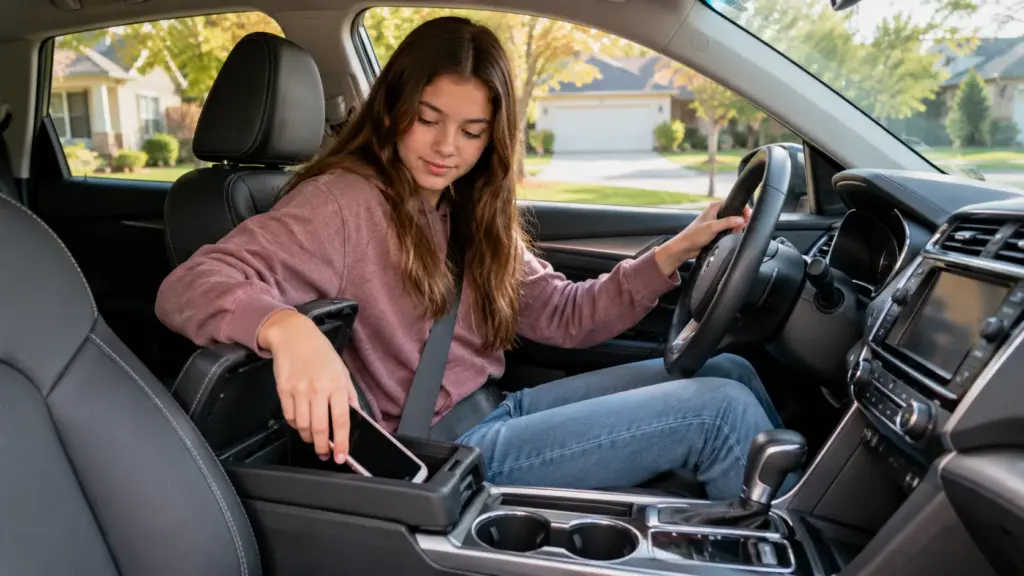
A phone can distract a driver through its screen, controls, sounds, and even the mental effort of composing a reply. Distractions also include eating, adjusting music, interacting with passengers, or searching for dropped objects.
The CDC’s distracted driving guidance describes visual, manual, and cognitive distractions. Agree that the teen will set a destination, start navigation, silence notifications, and put the phone away before moving. If a message or route change requires attention, pull over legally in a safe location first.
Parents should follow the same rules. A teen who repeatedly sees an adult check notifications at traffic lights is less likely to take a household phone policy seriously.
Limit Passengers During the First Months
Friends can turn a routine drive into a social event. Conversation, music, joking, and peer pressure may divide a new driver’s attention and make risky choices seem acceptable.
According to the CDC’s Eight Danger Zones for teen drivers, crash risk increases when teenagers drive with other young passengers. The CDC recommends avoiding teen or young-adult passengers for at least the first six months after licensing where possible. State laws may impose their own restrictions.
Agree in advance who may ride along, what exceptions apply, and what happens when plans change. Encourage the teen to call home rather than accept an unexpected passenger situation that violates the rules.
Protect Sleep and Restrict Nighttime Driving
Even familiar roads look different after dark. Headlight glare, reduced visibility, fatigue, and difficulty judging distance make driving more demanding. Schoolwork, sports, part-time jobs, and social activities can also leave teenagers short of sleep.
Set a conservative curfew that respects state restrictions and the teen’s experience. The National Safety Council’s night-driving lesson recommends beginning practice during daylight and moving gradually into evening driving under adult supervision. Parents should arrange another ride when a teen is tired or a planned trip would extend beyond the agreed hours.
Make Seat Belts Nonnegotiable
Every person in the vehicle should wear a correctly positioned seat belt before the car starts moving. This includes friends in the back seat, even on short neighborhood trips. A shoulder belt belongs across the chest and shoulder, and the lap belt should sit low across the hips.
Teach the driver to pause until everyone is buckled. For more context, link this rule with our article on new seat belt reminder systems, which explains how vehicle alerts can support proper habits without replacing personal responsibility.
Practice Speed Control and Following Distance
New drivers may focus on the posted limit without recognizing that rain, darkness, curves, pedestrians, or heavy traffic call for a slower speed. Practice identifying conditions that require more stopping distance and extra time to react.
Ask the teen to maintain a generous gap behind the next vehicle, scan well ahead, and slow early when approaching intersections. Demonstrate how traffic can stop suddenly near school entrances and crosswalks. Our back-to-school travel safety guide offers useful examples of busy drop-off zones and unpredictable pedestrian movement.
Discuss Impairment and a No-Penalty Ride Home
Alcohol, cannabis, other drugs, and certain medications can impair attention and driving performance. Make it clear that a teen must never drive while impaired or ride with someone who is impaired. The rule should apply regardless of whether the trip is short.
Agree on a practical exit plan: the teen may call a parent or other trusted adult for a safe ride at any hour without being pressured to drive home first. Families can address consequences for other decisions later; the immediate priority is getting everyone home safely.
Check the Car Before the Teen Drives
Teach basic vehicle readiness alongside steering and braking. Before leaving, the driver should check mirrors, lights, windshield visibility, tires for obvious damage, dashboard warnings, and adequate fuel or charge. They should know how to use headlights, hazard lights, windshield wipers, and defrosters.
Advanced driver assistance systems may provide warnings or limited braking or steering assistance, but they do not replace careful driving. If a car has cameras or collision-warning features, review their limitations. Our article on ADAS calibration after windshield replacement explains why modern safety equipment requires correct maintenance.
Create a Written Parent-Teen Driving Agreement
A short written agreement makes expectations easier to remember and apply fairly. It can cover phone use, seat belts, passengers, curfew, permitted routes, weather conditions, check-ins, vehicle care, and how to ask for help. Include reasonable consequences and a plan for gaining privileges through demonstrated responsibility.
The CDC provides a Parent-Teen Driving Agreement that families can complete and update as driving experience grows. Review it together rather than presenting it as a list of punishments.
Keep Coaching After the License Arrives
Passing a road test demonstrates that a new driver meets licensing requirements; it does not guarantee readiness for every road or emergency. Continue riding together occasionally, asking about difficult situations, and providing opportunities to practice unfamiliar routes.
AAA’s Pointers for Parents stresses ongoing involvement and setting a responsible example. Families can also review the past month’s driving habits and adjust privileges based on skills, not simply the passage of time.
Turn Teen Driver Safety Week Into a Year-Round Routine
National Teen Driver Safety Week creates a useful moment to revisit rules, but safer driving habits develop through repeated decisions. Practice progressively, remove distractions, limit passengers, plan around fatigue, buckle every occupant, and give teens a way to ask for help.
The strongest approach combines clear boundaries with patient coaching and a willingness to adjust the plan as a driver gains experience. Explore more practical advice in our Car Safety category, Road Safety articles, and the AccidentsPrevention.org blog.