
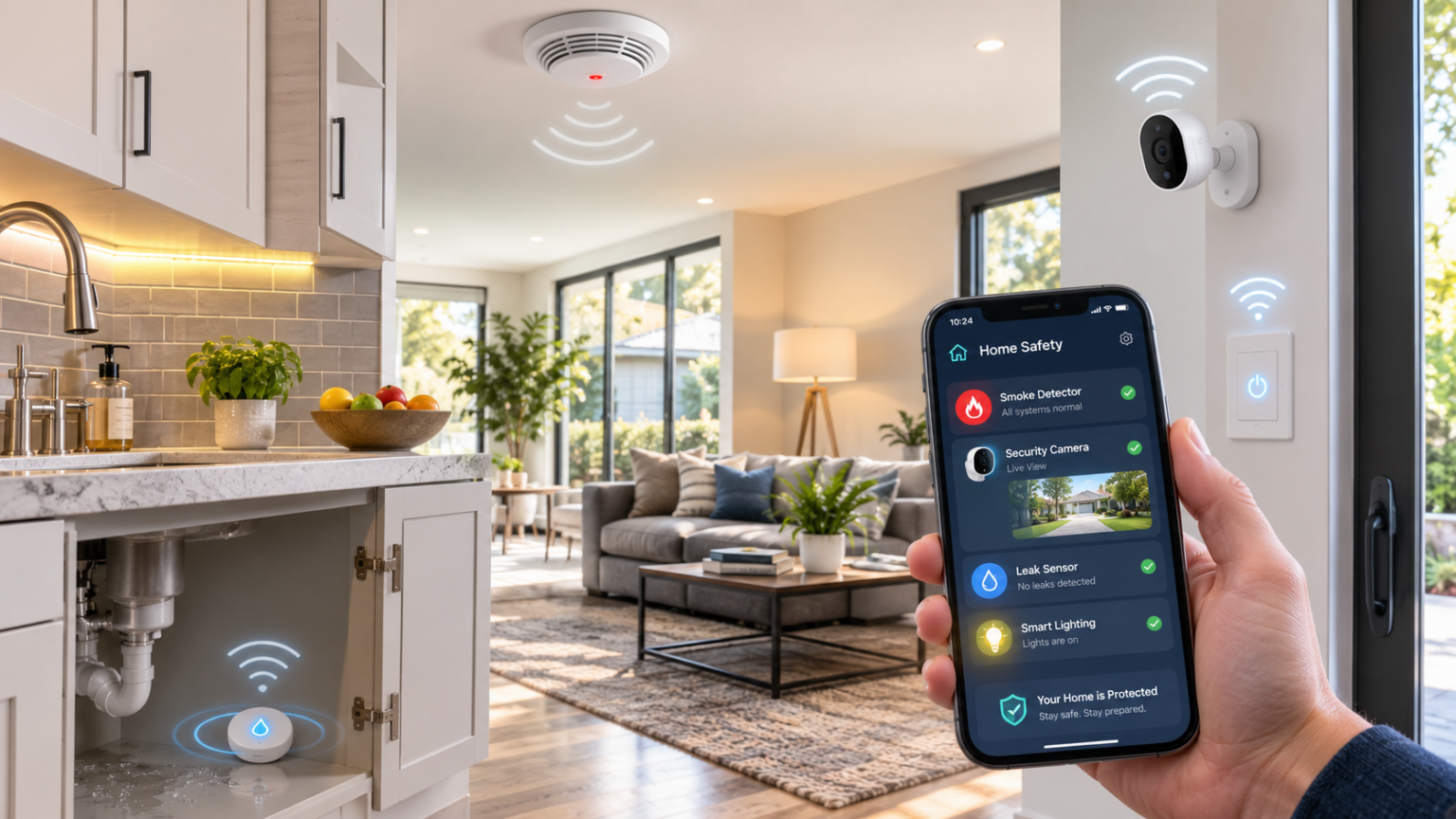
Modern smart home technology is changing more than convenience—it is becoming an important tool for improving household safety. Connected smoke alarms, leak detectors, security cameras, smart lighting, carbon monoxide detectors, and other intelligent devices help homeowners identify potential hazards before they become serious emergencies.
While no technology can eliminate every risk, smart home devices provide early warnings that allow families to respond quickly. Whether it’s detecting smoke from a kitchen fire, identifying a water leak before major damage occurs, or automatically illuminating dark hallways to reduce fall risks, these systems can play an important role in preventing everyday accidents.
At AccidentsPrevention.org, we believe education and preparation work together to reduce preventable injuries. You can also learn more about our mission by visiting our About Us page.
Why Home Accidents Continue to Be a Concern
Many injuries occur inside or around the home. Falls, fires, carbon monoxide exposure, electrical hazards, accidental poisonings, and water-related incidents affect thousands of households every year. Fortunately, many of these events can be minimized through routine maintenance, increased awareness, and the use of reliable safety technology.
Smart home devices are designed to continuously monitor conditions and notify homeowners when something unusual occurs, often before people notice a problem themselves.
Smart Smoke and Carbon Monoxide Detectors
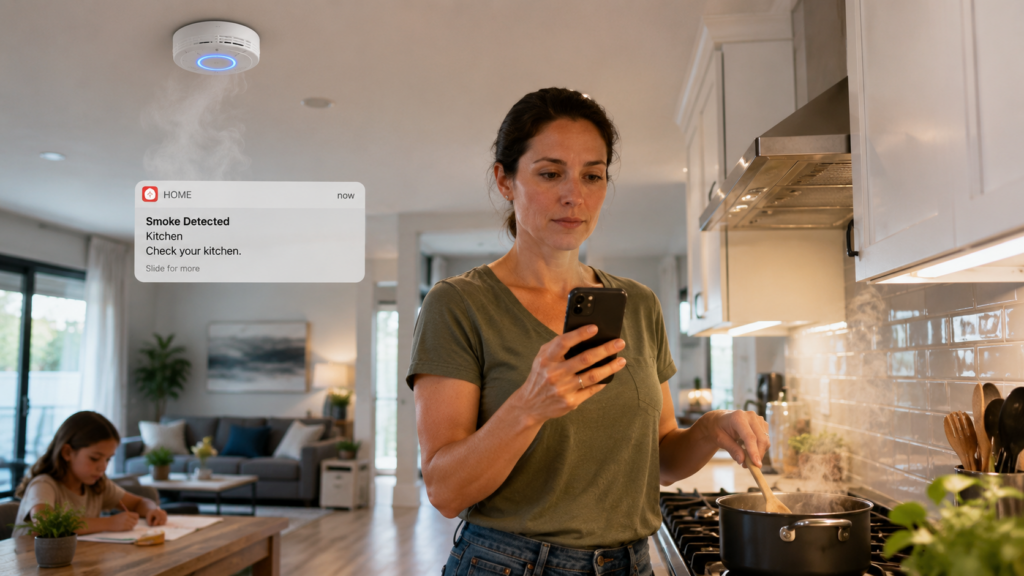
Traditional smoke alarms remain one of the most effective life-saving devices in any home. Today’s smart smoke detectors build on that protection by sending notifications directly to a smartphone whenever smoke or carbon monoxide is detected.
Some systems can also:
- Identify which room triggered the alarm.
- Alert multiple household members simultaneously.
- Perform automatic self-testing.
- Warn when batteries need replacement.
- Integrate with other smart home devices.
Early notification can be especially valuable when no one is home or when family members are sleeping in different parts of the house.
Water Leak Detection Prevents Costly Damage
Small plumbing leaks often go unnoticed until they become expensive repairs. Smart water leak sensors continuously monitor moisture around appliances, sinks, water heaters, washing machines, and plumbing fixtures.
When a leak is detected, homeowners receive immediate alerts through a mobile app, allowing them to investigate before significant damage develops.
Some advanced systems can even shut off a home’s water supply automatically after detecting a major leak.
Smart Lighting Reduces Fall Risks
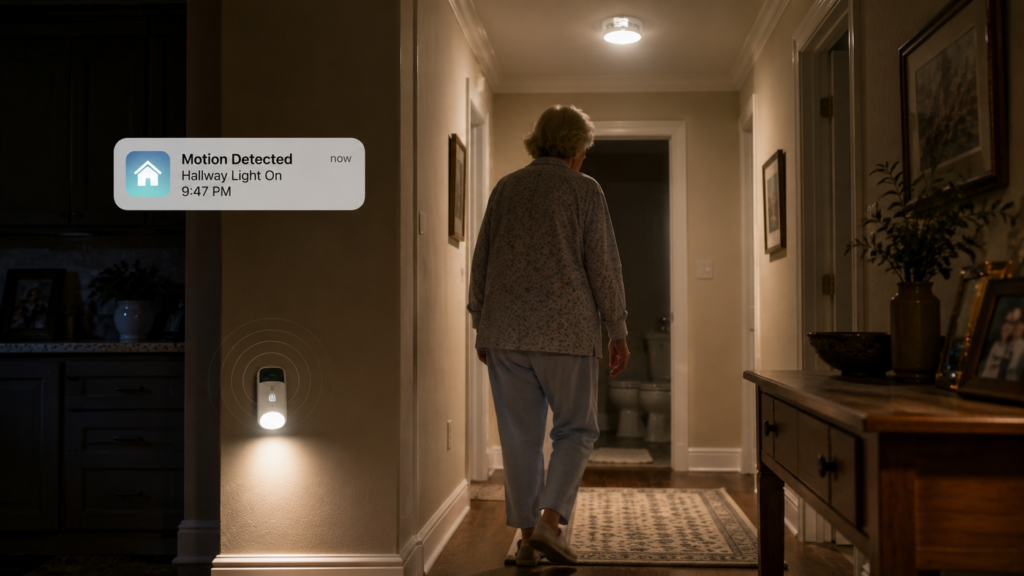
Falls remain one of the most common causes of injury inside the home, particularly among older adults and young children. Motion-activated smart lighting helps reduce these risks by automatically illuminating hallways, staircases, bathrooms, garages, and outdoor walkways.
Benefits include:
- Improved nighttime visibility.
- Reduced need to search for light switches.
- Safer stairway navigation.
- Enhanced exterior pathway lighting.
- Automatic scheduling based on sunset and sunrise.
Simple improvements in lighting can significantly reduce the likelihood of trips and falls.
Security Cameras Improve Situational Awareness
Smart security cameras are commonly associated with crime prevention, but they also contribute to household safety. Homeowners can monitor deliveries, supervise children playing outdoors, check on pets, or verify whether elderly family members arrived home safely.
Many systems include motion detection, two-way communication, and real-time mobile notifications, allowing users to respond quickly to unexpected situations.
Smart Door and Window Sensors
Connected door and window sensors notify homeowners when an entry point has been opened unexpectedly. These devices can also help families monitor children, identify unsecured doors at night, or verify that windows have been closed before severe weather arrives.
Receiving immediate alerts helps homeowners take corrective action quickly.
Monitoring Indoor Air Quality
Indoor air quality affects both comfort and health. Some smart home systems monitor:
- Carbon dioxide levels.
- Humidity.
- Temperature.
- Volatile organic compounds (VOCs).
- Airborne particulate matter.
Maintaining appropriate indoor conditions can reduce mold growth, improve ventilation, and create a healthier living environment.
Protecting Older Adults
Many families use smart home technology to support aging in place. Motion sensors, automated lighting, emergency response devices, and voice-controlled assistants can help older adults maintain independence while providing peace of mind for caregivers.
Although technology cannot replace personal care, it can supplement existing safety measures by providing timely alerts when unusual activity is detected.
Building a Safer Family Routine
Technology works best when combined with consistent safety habits. Families should regularly test alarms, replace batteries when recommended, inspect electrical cords, keep emergency exits clear, safely store medications and cleaning products, and review emergency plans together.
Smart devices support these efforts by making safety reminders easier to manage.
Choosing Reliable Devices
When selecting smart home safety products, look for devices from reputable manufacturers that provide regular software updates and strong security protections. Reading independent product reviews and following installation instructions carefully can help ensure reliable performance.
Always verify compatibility with your home’s existing systems before making a purchase.
Privacy and Cybersecurity Considerations
Because many smart home devices connect to the internet, cybersecurity is an important part of household safety. Protect connected devices by using strong passwords, enabling multi-factor authentication when available, installing software updates promptly, and securing your home Wi-Fi network.
Review each manufacturer’s privacy policy to understand how your data is stored and used.
Helpful Safety Resources
- U.S. Consumer Product Safety Commission
- National Fire Protection Association
- Ready.gov Emergency Preparedness
- Centers for Disease Control and Prevention
- National Safety Council
Conclusion
Smart home technology is becoming an increasingly valuable partner in household accident prevention. Connected smoke alarms, leak detectors, motion-activated lighting, indoor air quality monitors, and security systems provide early warnings that help families respond before small issues become major emergencies. Combined with routine maintenance, emergency planning, and everyday safety awareness, these technologies can contribute to safer homes and greater peace of mind.
Explore more educational resources throughout AccidentsPrevention.org for practical guidance on road safety, home safety, workplace injury prevention, and emergency preparedness.