
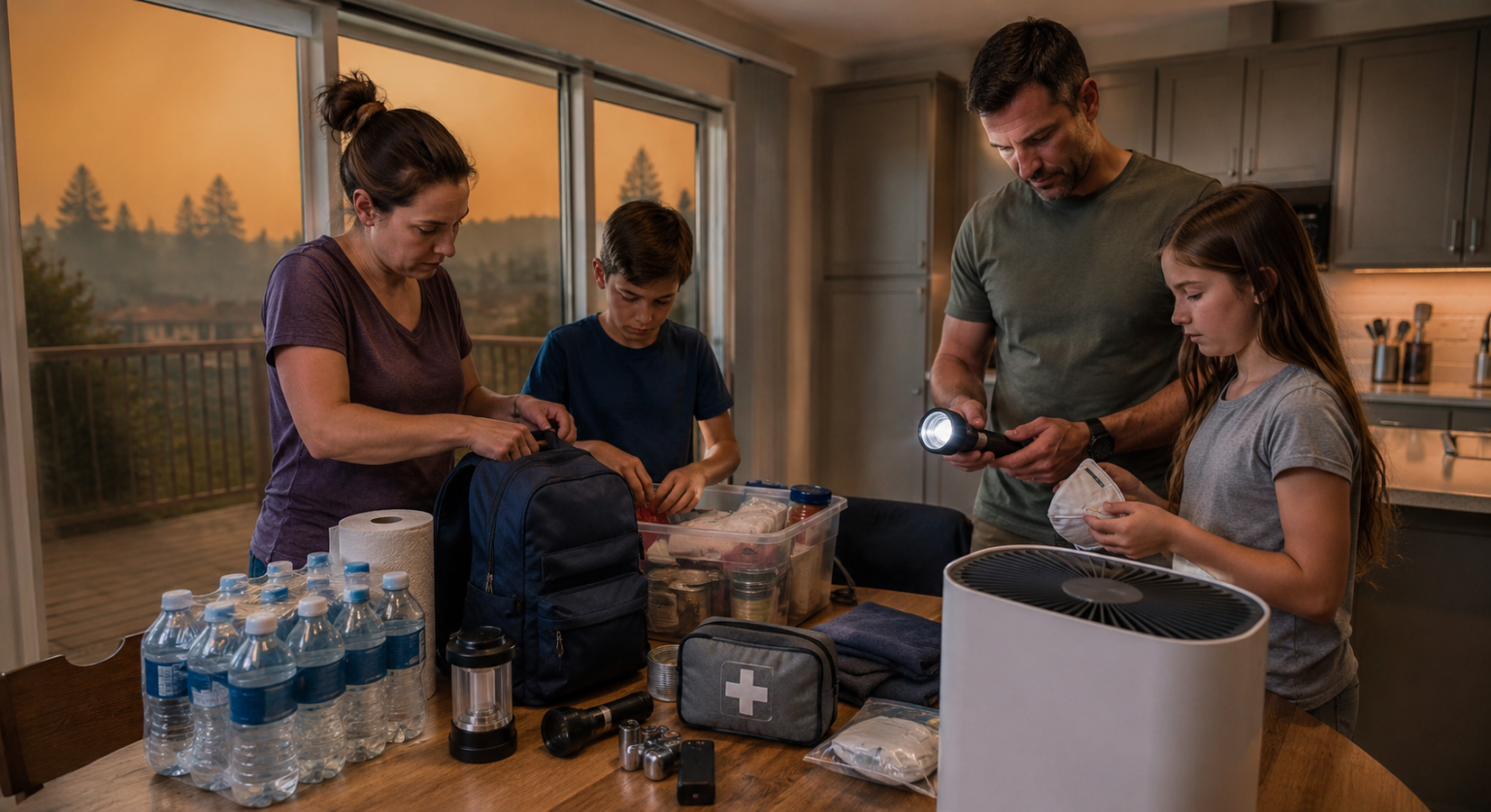
Wildfires can threaten communities even when the flames are many miles away. Smoke may travel across several states, reduce outdoor visibility, worsen indoor air quality, and create health risks for people who have asthma, heart disease, respiratory conditions, or other vulnerabilities. At the same time, wildfire conditions may damage electrical equipment or lead utilities to interrupt service as a precaution, leaving homes without air conditioning, refrigeration, lighting, internet access, or medical-device charging.
Preparing for wildfire smoke and power outages together can help a household respond more safely when conditions change quickly. A practical plan should address indoor air quality, emergency power, communication, medications, food, water, transportation, pets, and evacuation. Families can begin with the general planning resources available in our Emergency Preparedness guides and then adapt the recommendations below to their location and individual needs.
Why Wildfire Smoke and Outages Require a Combined Plan
A wildfire emergency can create several overlapping problems. Smoke may make it unsafe to open windows, while a power outage may stop an air-conditioning system or portable air cleaner from operating. Extreme heat can make the situation more dangerous, particularly for older adults, infants, pregnant individuals, outdoor workers, and people with chronic medical conditions.
Power interruptions may also affect cell towers, traffic signals, gas stations, grocery stores, pharmacies, and electronic payment systems. Preparing only for smoke or only for an outage can leave important gaps. A combined plan gives each household member clear instructions for staying inside, relocating to cleaner air, conserving battery power, protecting food, or evacuating when necessary.
Monitor Local Fire, Smoke, and Air-Quality Conditions
Do not rely only on the smell or appearance of the air. Wildfire particles may affect air quality before smoke becomes obvious. Check official local emergency notifications, weather alerts, fire-agency announcements, and air-quality reports throughout the day.
The AirNow Fire and Smoke Map provides information about wildfire locations, smoke conditions, and air quality across the United States. The EPA Smoke-Ready Toolbox also offers guidance for reducing smoke exposure and understanding wildfire-related air risks.
Sign up for local government alerts before an emergency begins. Keep a battery-powered or hand-crank radio available in case mobile service, television, or internet access becomes unreliable. Write important phone numbers and evacuation information on paper so they remain accessible when devices cannot connect or lose power.
Create a Clean-Air Room
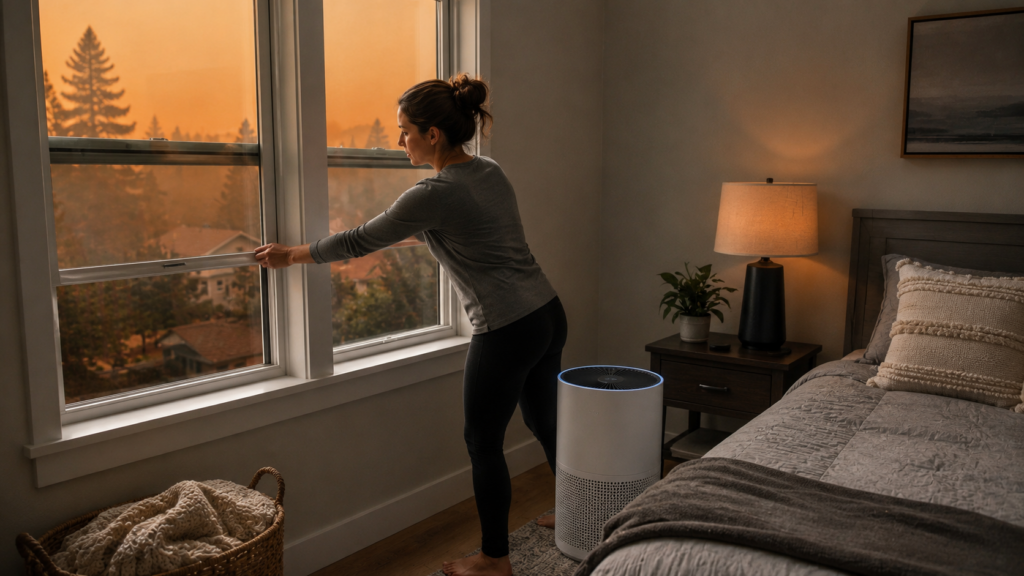
A clean-air room is an interior space where household members can spend time when outdoor smoke levels are unhealthy. Choose a room with few windows and doors, enough space for the people and pets in the home, and access to electricity under normal conditions.
Before smoke arrives, inspect windows and doors for gaps that allow outdoor air to enter. Keep them closed during a smoke event unless officials instruct residents to ventilate. Avoid activities that create additional indoor pollution, including smoking, burning candles, using a fireplace, frying food, or vacuuming without an appropriate filter.
A correctly sized portable air cleaner with a high-efficiency filter may help reduce airborne particles. Follow the manufacturer’s instructions, replace filters when needed, and avoid devices that intentionally produce ozone. The EPA’s wildfire and indoor air-quality guidance explains how families can reduce smoke inside their homes.
Prepare for Air Cleaning Without Electricity
A portable air cleaner cannot operate during a power failure unless it has a safe backup power source. Identify public locations that may provide cleaner, cooled air, such as designated clean-air centers, libraries, community centers, shopping centers, or emergency shelters. Confirm their operating status before traveling.
Households with enough warning may relocate temporarily to an unaffected area. Plan several destinations because hotels, shelters, and relatives’ homes may fill quickly during a regional emergency.
Respirators can provide additional protection when a person must briefly enter smoky outdoor air. The Centers for Disease Control and Prevention recommends taking steps to limit smoke exposure and following public-health instructions. Properly fitted N95 respirators may filter fine particles, but they do not replace cleaner indoor air and may not be appropriate for everyone. People with breathing or heart conditions should ask a healthcare professional about suitable protection before wildfire season.
Build a Wildfire and Power Outage Supply Kit
Store supplies in a location that is easy to reach. Include enough essentials for every household member, considering that stores, pharmacies, and fuel stations may be closed or crowded.
Your emergency supplies should include drinking water, shelf-stable food, manual can openers, flashlights, spare batteries, phone power banks, a battery-powered radio, first-aid materials, hygiene products, copies of important documents, local maps, cash, pet supplies, and necessary medications. Include N95 respirators in appropriate sizes, replacement air-cleaner filters, protective eyewear, and sturdy shoes.
Households should also add items for infants, older adults, people with disabilities, and anyone who depends on refrigerated medication or electrically powered medical equipment. The Ready.gov emergency kit guide provides a useful foundation for assembling and maintaining supplies.
Plan for Medical and Accessibility Needs
Anyone who uses oxygen equipment, mobility devices, communication equipment, dialysis support, refrigerated medicine, or another power-dependent medical device should develop a backup plan with a healthcare provider and equipment supplier.
Know how long backup batteries will last and how they can be safely recharged. Keep a written list of medications, dosages, allergies, healthcare contacts, equipment model numbers, and supplier information. Ask local emergency management officials whether the community maintains a voluntary assistance registry or offers transportation to accessible shelters.
Never wait until batteries are nearly depleted before seeking help. If an outage creates an immediate medical danger, contact emergency services or relocate according to the medical plan established in advance.
Use Generators and Backup Power Safely
Portable generators can provide temporary electricity, but improper use may cause carbon monoxide poisoning, fires, or electrical injuries. Operate generators only outdoors and well away from windows, doors, garages, vents, and other openings. Never run a generator inside a home, basement, shed, carport, or attached garage.
Use heavy-duty extension cords rated for outdoor use and the electrical load being supplied. Do not connect a generator directly to household wiring unless a qualified electrician has installed an approved transfer system. Keep working carbon monoxide alarms on every level of the home and replace batteries as recommended.
Portable power stations may be useful for phones, lights, radios, or certain small devices, but users must follow charging, storage, ventilation, and load-limit instructions. A backup battery should never be assumed capable of safely operating a medical device unless the equipment provider confirms compatibility.
Protect Food and Water During an Outage
Keep refrigerator and freezer doors closed as much as possible. Group frequently needed items together before an expected outage so the door does not remain open while someone searches. Use appliance thermometers to monitor temperatures, and follow official food-safety instructions when deciding whether food can be kept.
Do not taste food to determine whether it is safe. When uncertain, discard it. Keep several days of shelf-stable food that does not require cooking, refrigeration, or large amounts of water.
Wildfires and power failures may also affect pumps, wells, and public water systems. Store drinking water before an emergency and follow local boil-water or contamination advisories. Additional outage preparation is available from Ready.gov’s power outage guidance.
Prepare to Evacuate Early
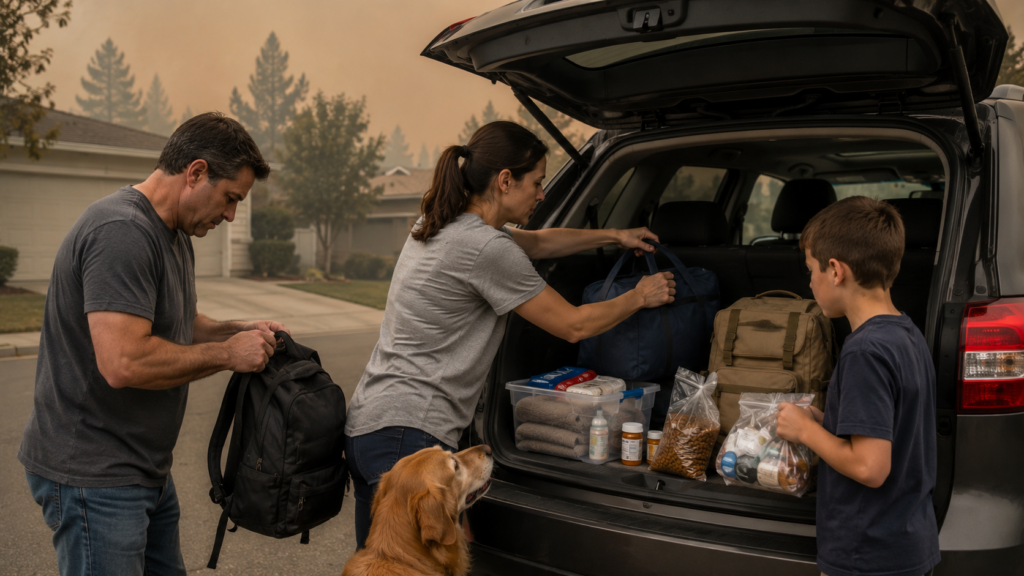
Smoke conditions can worsen rapidly, and evacuation routes may become congested. Make a household evacuation plan that includes at least two routes, several destinations, transportation arrangements, and a meeting place outside the neighborhood.
Keep the vehicle fueled or sufficiently charged. Place emergency bags, medications, respirators, water, pet carriers, important documents, and protective clothing where they can be loaded quickly. Do not leave pets behind. Identify pet-friendly accommodations and shelters before wildfire season.
Evacuate immediately when local authorities issue an order. Do not delay to collect additional belongings or wait until flames are visible. Residents can review the Ready.gov wildfire preparedness recommendations for planning before, during, and after a fire.
Communicate Without Overloading Networks
Designate an out-of-area contact who can receive updates from household members. Text messages may go through when voice calls do not. Agree on simple status messages, such as “safe at home,” “leaving now,” or “at meeting location,” to conserve battery power and reduce confusion.
Charge devices whenever warnings are issued. Activate low-power mode, reduce screen brightness, close unnecessary applications, and limit streaming. Keep charging cables in emergency bags and vehicles.
Review and Update the Plan Regularly
Preparedness plans should be reviewed at least twice a year and whenever a household member’s medical, mobility, school, work, or transportation needs change. Replace expired food, medications, batteries, and filters. Test smoke alarms, carbon monoxide alarms, radios, flashlights, power banks, and communication procedures.
Practice setting up the clean-air room and loading the vehicle. Make sure children understand whom to contact and where to meet without giving them responsibilities beyond their age and abilities.
Prepare Before Smoke Appears
The safest time to prepare for wildfire smoke and power outages is before an alert is issued. Monitoring trusted information, creating a clean-air room, maintaining emergency supplies, protecting medical needs, and planning evacuation routes can reduce last-minute decisions during a dangerous event.
No single device or checklist can eliminate every wildfire risk. However, a household that prepares for smoke, electricity loss, extreme heat, and evacuation as connected problems will be better positioned to respond calmly and protect its members.