
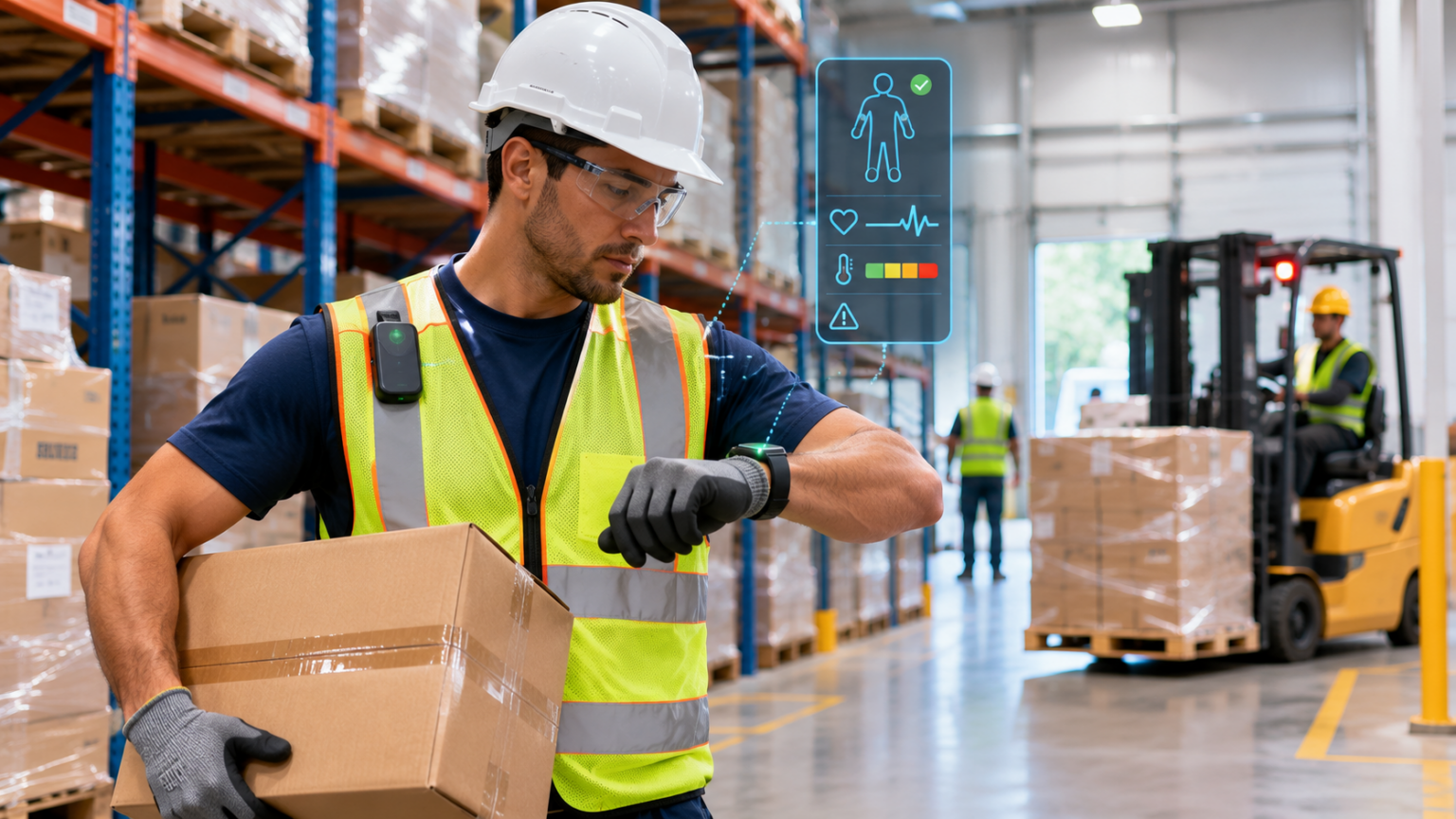
Wearable technology is becoming an increasingly important part of workplace accident prevention. Devices worn on a worker’s clothing, wrist, helmet, belt, or safety equipment can monitor movement, environmental conditions, fatigue, location, and proximity to dangerous machinery. When properly selected and implemented, these tools can provide early warnings that allow workers and supervisors to address hazards before an injury occurs.
Workplace wearables are now being tested and used in construction, manufacturing, warehousing, transportation, utilities, healthcare, emergency response, and other industries. Some devices alert workers immediately, while others collect information that safety teams can use to improve equipment, workstations, schedules, and procedures.
Wearables should not replace training, protective equipment, machine guards, inspections, or effective safety policies. Instead, they can provide an additional layer of protection within a broader safety program. Readers can find related prevention guidance in our Workplace Safety resources.
What Is Wearable Safety Technology?
Wearable safety technology includes electronic devices or sensors that workers carry or wear while completing job tasks. Depending on their purpose, these devices may monitor physical movement, body temperature, environmental exposure, location, fatigue, noise, vibration, or proximity to equipment.
Common examples include smart safety vests, connected helmets, wrist sensors, posture monitors, heat-stress devices, lone-worker alarms, wearable gas detectors, and proximity-warning tags. Some systems provide an audible alarm, vibration, light, or mobile notification when they detect a potentially dangerous condition.
The National Safety Council’s workplace safety technology resources identify wearables, fatigue monitors, vital-sign sensors, downed-worker devices, and proximity systems as tools that may help address serious workplace hazards.
Monitoring Posture and Ergonomic Risks
Repetitive movement, heavy lifting, awkward posture, bending, reaching, and forceful exertion can contribute to musculoskeletal disorders. These injuries may affect the back, shoulders, arms, wrists, knees, muscles, tendons, and joints.
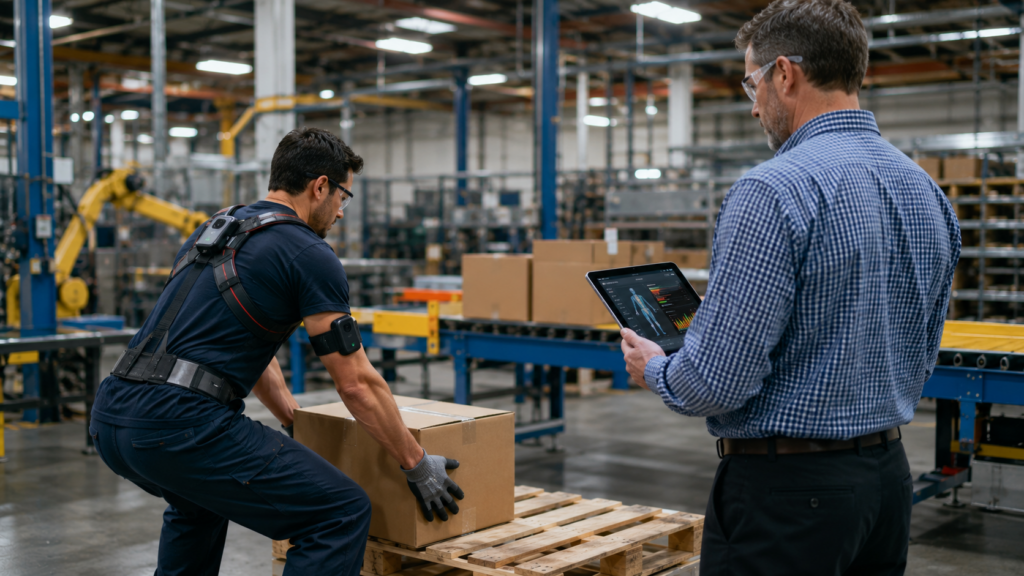
Wearable ergonomic sensors can measure how a worker bends, twists, reaches, or lifts during a task. A device may vibrate when the user moves into a high-risk position, providing an immediate reminder to adjust posture or use a safer technique. Collected information may also help an employer identify tasks that repeatedly place workers under physical strain.
The goal should not be to blame workers for normal movements required by poorly designed jobs. Employers should use the information to improve workstation height, material placement, tools, staffing, job rotation, lifting assistance, or production methods. The Occupational Safety and Health Administration’s ergonomics guidance explains that workplace risk factors may include heavy lifting, repetitive tasks, forceful movement, and awkward body positions.
Reducing Struck-By and Equipment Hazards
Workers in warehouses, construction zones, loading areas, farms, factories, and distribution centers may operate near forklifts, trucks, cranes, mobile machinery, or automated equipment. Noise, blind corners, restricted visibility, and changing work zones can make it difficult for workers and equipment operators to see one another.
Wearable proximity sensors can communicate with devices installed on vehicles or machinery. When a worker enters a predefined danger zone, the system may warn the worker, equipment operator, or both. Some systems can also record recurring near-miss locations, helping safety teams redesign traffic routes or improve barriers and markings.
The National Institute for Occupational Safety and Health has discussed wearable warning systems and embedded communication devices as potential tools for protecting construction workers from vehicle movement and work-zone intrusions.
Detecting Heat Stress
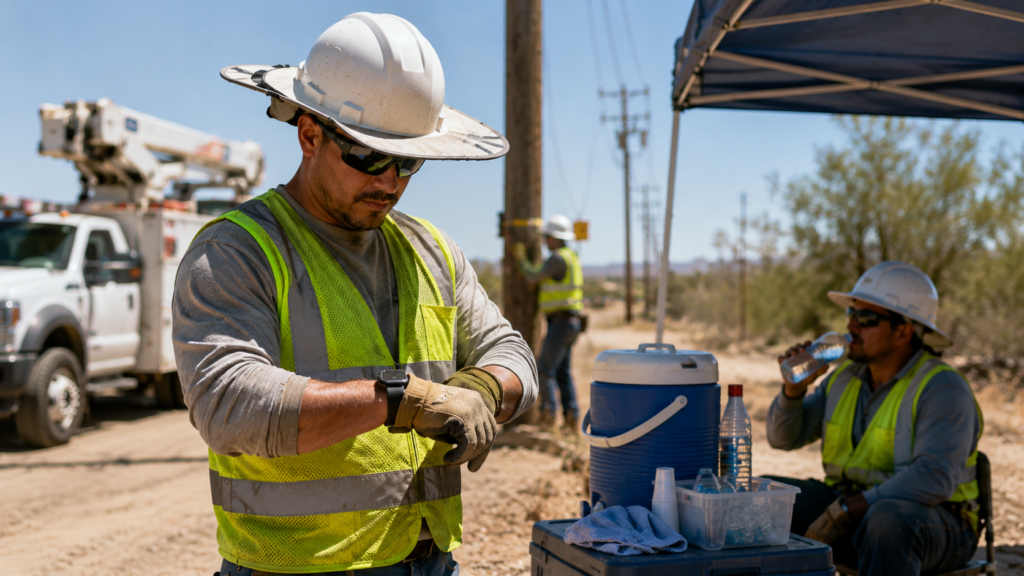
Outdoor workers and employees in hot indoor environments may be exposed to excessive heat. Construction crews, agricultural workers, delivery drivers, warehouse staff, utility workers, firefighters, and manufacturing employees may face increased risk during high temperatures or physically demanding work.
Certain wearable devices monitor indicators such as skin temperature, heart rate, exertion, humidity, or environmental heat. When readings suggest that a worker may be approaching unsafe conditions, the device can prompt a break, hydration, cooling, or evaluation by a supervisor.
These systems should support, not replace, a complete heat-safety program. Employers still need to provide drinking water, appropriate rest periods, shaded or cooled recovery areas, acclimatization procedures, training, and emergency response plans. Workers should also know the symptoms of heat exhaustion and heat stroke and report warning signs promptly.
Managing Fatigue-Related Risks
Fatigue may slow reaction time, reduce concentration, impair judgment, and increase the likelihood of mistakes. It can be particularly dangerous for employees who drive, operate machinery, work at heights, perform medical procedures, or complete long and irregular shifts.
Fatigue-monitoring wearables may evaluate movement patterns, sleep-related information, reaction performance, or other indicators. Some systems provide a personal alert when signs of reduced alertness appear. Others help safety teams identify scheduling patterns or tasks associated with increased fatigue.
Employers should avoid treating fatigue solely as an individual worker problem. Long shifts, inadequate staffing, unpredictable schedules, physically demanding duties, and insufficient recovery time may contribute to the risk. Wearable data is most useful when it leads to safer scheduling, adequate breaks, workload changes, or other practical controls.
Protecting Employees Who Work Alone
Lone workers may perform maintenance, inspections, security duties, utility work, deliveries, home healthcare, or field assignments without another person nearby. If they fall, become ill, encounter violence, or enter a hazardous environment, assistance may be delayed.
A lone-worker wearable may include a manual emergency button, automatic fall detection, location sharing, missed check-in alerts, or two-way communication. A downed-worker device may recognize that a person has stopped moving or remained horizontal for an unusual amount of time.
Technology cannot guarantee an immediate rescue, so employers should establish clear response procedures. Supervisors and dispatchers must know who receives alerts, how quickly they should respond, when emergency services should be contacted, and what information rescuers may need.
Monitoring Hazardous Environmental Conditions
Wearable and portable sensors may detect gases, excessive noise, vibration, poor air quality, or other harmful conditions. A connected gas monitor, for example, may warn a worker before entering an area where oxygen levels or hazardous substances create an immediate danger.
Real-time sensors can also help safety professionals identify patterns that might not be obvious during occasional inspections. The NIOSH Center for Direct Reading and Sensor Technologies studies tools and methods that provide real-time information about occupational exposures and workplace conditions.
Monitoring devices must be appropriate for the specific hazard, properly calibrated, correctly maintained, and used by trained employees. A sensor that is damaged, poorly positioned, or designed for a different environment may provide inaccurate or incomplete information.
Helping Prevent Falls
Some wearable systems can identify sudden movement, loss of balance, or a fall. They may automatically notify a supervisor or emergency contact when a worker falls from a height or collapses in a remote area.
Other devices are designed to prevent falls by warning workers when they approach an unprotected edge or enter a restricted zone. Smart helmets and connected harnesses may also help verify whether required protective equipment is being used correctly.
These technologies do not replace guardrails, safe scaffolds, properly selected personal fall-arrest systems, inspections, or fall-protection training. The most effective prevention strategy is still to eliminate or control the fall hazard before relying on a worker-worn warning device.
Privacy and Worker Trust
Wearable technology may collect sensitive information about a person’s location, movement, physical condition, or work habits. Employees may reasonably worry that safety data could be used for discipline, productivity tracking, surveillance, or unrelated employment decisions.
Before introducing a wearable system, an employer should explain what information will be collected, why it is needed, who can access it, how long it will be retained, and whether it will be shared. Workers should have opportunities to ask questions and participate in selecting, testing, and evaluating the technology.
NIOSH has noted that wearable sensors may present concerns involving data accuracy, security, and personal privacy. Its ethical framework for wearable sensors highlights the importance of considering these issues when the devices are used for occupational safety and health.
How Employers Can Introduce Wearables Responsibly
An employer should begin by identifying a specific hazard rather than purchasing technology simply because it is new. Injury records, near-miss reports, inspections, worker feedback, and task observations can help determine where additional monitoring may be useful.
A small pilot program can reveal whether a device is comfortable, accurate, durable, and compatible with existing protective equipment. Employers should evaluate whether alerts are understandable, whether false alarms are frequent, and whether the system creates new distractions.
Workers should receive training on what the device measures, how to wear it correctly, what each warning means, and what action to take. Employers should also measure whether the technology actually reduces exposure, improves working conditions, or prevents incidents.
Technology Is Only One Part of Prevention
Wearable safety technology can help identify hazards earlier, improve emergency communication, and provide useful information about how work is performed. However, it cannot make unsafe equipment, inadequate staffing, missing guards, poor training, or dangerous procedures acceptable.
The strongest workplace safety programs follow the hierarchy of controls by prioritizing hazard elimination, substitution, engineering controls, and effective administrative measures before relying primarily on personal equipment. Wearables can strengthen these protections, but they should not become a substitute for correcting the underlying hazard.
Building a Safer Workplace With Wearable Technology
Wearable devices offer promising ways to monitor posture, heat, fatigue, environmental exposure, falls, and proximity to machinery. Their greatest value comes from providing information that leads to practical safety improvements.
Successful use depends on choosing technology for a clearly defined risk, involving workers in the process, protecting personal information, testing devices carefully, and combining them with proven safety controls. When these principles are followed, wearable safety technology can become a useful part of a broader effort to prevent workplace injuries.
Explore more practical guidance in our Workplace Safety category, browse our latest accident prevention articles, or learn more about the educational mission of AccidentsPrevention.org.