

Lithium-ion batteries power many of the devices used in modern homes, including smartphones, laptops, tablets, wireless headphones, power tools, vacuum cleaners, toys, lawn equipment, e-bikes, e-scooters, and portable power stations. These rechargeable batteries provide substantial energy in a compact form, making them useful for everyday electronics and transportation.
Most lithium-ion products operate safely when they are manufactured correctly and used according to their instructions. However, a defective, damaged, overheated, improperly charged, or modified battery can create a serious fire hazard. A failing battery may enter a process called thermal runaway, in which rapidly increasing heat causes a chain reaction that may produce toxic gases, flames, or an explosion.
A 2026 analysis from the National Institute of Standards and Technology described lithium-ion battery fires as a growing problem and found that available reporting may substantially underestimate their frequency. Understanding how to purchase, charge, store, inspect, and recycle battery-powered products can help families reduce these risks.
For additional household prevention information, explore our Home Safety guides and our article about using smart-home technology to prevent household accidents.
Why Lithium-Ion Batteries Can Become Dangerous
A lithium-ion battery contains cells that store chemical energy. Under normal conditions, internal controls regulate charging, temperature, voltage, and electrical current. Problems can develop when a battery is crushed, punctured, dropped, exposed to excessive heat, charged with incompatible equipment, poorly manufactured, or altered by someone who is not qualified to repair it.
Heat can spread from one cell to neighboring cells inside a battery pack. Once thermal runaway begins, the reaction may develop quickly and may continue even after flames initially appear to stop. The U.S. Fire Administration explains that lithium-ion battery incidents may involve flammable gases, ejected cells, intense heat, and a risk of reignition.
This does not mean every rechargeable device is unsafe. It means consumers should treat batteries as energy-storage products that require appropriate equipment, regular inspection, and careful handling.
Buy Products That Meet Recognized Safety Standards
Battery safety begins before a product enters the home. Purchase devices, batteries, and chargers from reputable manufacturers and retailers. Research the product and look for evidence that it has been evaluated by a nationally recognized testing laboratory. Be cautious of products with missing manufacturer information, unclear instructions, unusually low prices, or unsupported safety claims.
The National Fire Protection Association’s lithium-ion battery guidance recommends choosing listed products that meet established safety standards. A safety certification cannot eliminate every possible failure, but proper testing can help verify that a product meets relevant electrical and fire-safety requirements.
Before buying a used e-bike, scooter, power tool, laptop, or battery pack, ask about its history. A battery that has been involved in a crash, submerged in water, stored improperly, modified, or repeatedly overheated may have damage that is not immediately visible.
Use Only the Correct Battery and Charger
Use the charger supplied with the product or a replacement specifically approved by its manufacturer. A connector that physically fits a battery is not necessarily electrically compatible with it. Voltage, current, connector configuration, charging controls, and communication systems may differ between products.
The U.S. Consumer Product Safety Commission warns against unapproved universal chargers for e-bikes, e-scooters, hoverboards, and similar products. An incompatible charger can overcharge or overheat a battery even when the plug appears to work.
Do not mix batteries, chargers, or components from different products unless the manufacturer confirms compatibility. Never modify a battery pack, bypass its safety controls, replace individual cells, or attempt a homemade repair.
Choose a Safe Charging Location
Charge devices on a stable, hard surface where heat can dissipate. Keep the battery and charger away from paper, clothing, curtains, bedding, upholstered furniture, gasoline, cleaning chemicals, and other materials that can burn.
Do not charge a phone, tablet, laptop, or power bank underneath a pillow or blanket. Soft materials can trap heat and may delay the discovery of a problem. E-bikes and e-scooters should not be charged in hallways, stairways, doorways, or other areas needed for evacuation.
Make sure the charging area has a working smoke alarm nearby. Avoid placing large batteries in bedrooms or along the only exit from the home. Our guide to wildfire smoke and power outage preparedness also explains how battery-powered emergency supplies can be included in a household plan. Power banks and portable power stations kept for emergencies should be inspected and stored just as carefully as frequently used devices.
Stay Present While Batteries Are Charging
Do not leave high-capacity batteries charging when everyone has gone to sleep or left the home. Remaining nearby makes it more likely that unusual heat, odor, sound, smoke, or changes in the battery will be noticed early.
Follow the charging time and procedures provided by the manufacturer. Disconnect the charger when charging is complete unless the instructions specifically state that continued connection is safe. Avoid repeatedly leaving devices connected for extended periods without a reason.
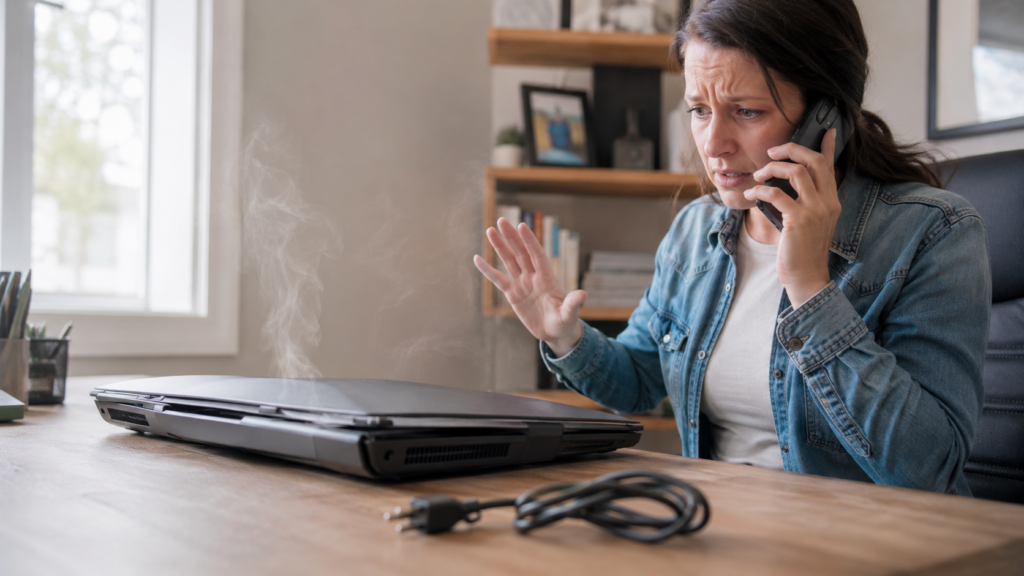
If the charger, cable, battery, or electrical outlet becomes unusually hot, stop using the equipment. Damaged cables, loose plugs, exposed wiring, scorched outlets, and cracked charging ports should be evaluated or replaced before charging resumes.
Know the Warning Signs of Battery Failure
Battery problems may develop gradually or appear suddenly. Stop using a device and move away from it when you notice warning signs such as:
- Swelling, bulging, cracking, or a change in shape
- Unusual heat during use, storage, or charging
- A strong, unfamiliar, or chemical odor
- Leaking fluid or visible corrosion
- Popping, crackling, or hissing sounds
- Smoke, vapor, sparks, or a change in color
- A battery that will not charge normally or loses power unexpectedly
Do not puncture, squeeze, bend, open, or continue charging a swollen battery. Contact the manufacturer, retailer, or local household hazardous waste program for instructions. Keep people and pets away from the device while determining how it can be handled safely.
Respond Safely to Smoke or Fire
If a battery begins smoking, venting gas, making loud popping sounds, or producing flames, do not pick it up or attempt to carry it through the home. A failing battery may rupture, release hazardous gases, or spread burning cells.
Leave the immediate area, warn everyone in the home, and call 911. Close the door behind you when it can be done without delaying evacuation. Remain outside and tell responding firefighters that the incident involves a lithium-ion battery.
The U.S. Fire Administration encourages consumers to get out quickly when a battery fire occurs. Its battery fire safety guidance also recommends stopping use when a battery shows excessive heat, leaking, an unusual odor, discoloration, or a change in shape.
Store Batteries Away From Heat and Damage
Store batteries at a moderate room temperature in a dry location. Do not leave battery-powered devices in direct sunlight, near heaters, inside hot vehicles, or in areas exposed to freezing conditions unless the manufacturer specifically permits it.
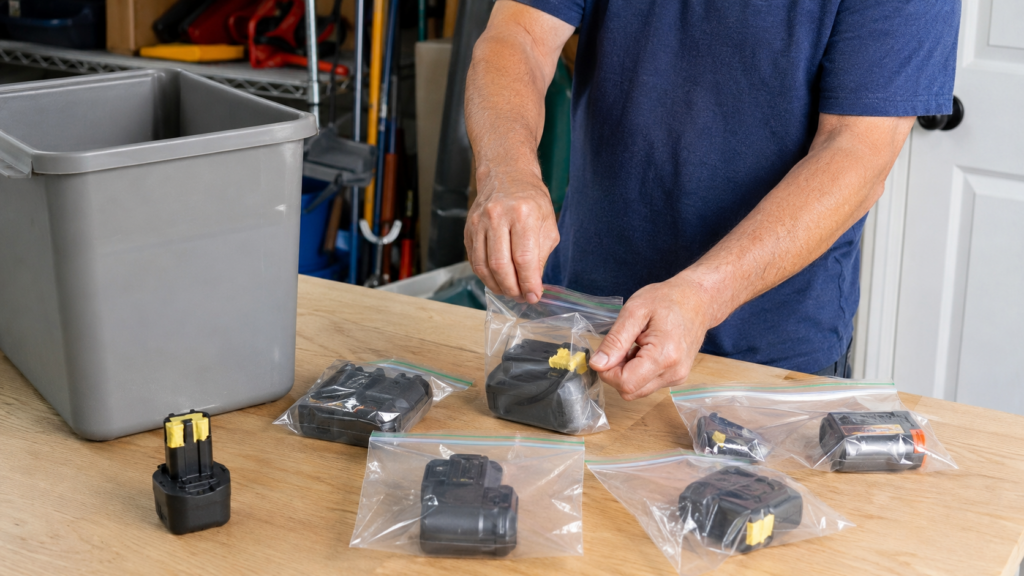
Protect spare batteries from loose metal objects such as keys, coins, screws, or tools. Metal contacting exposed battery terminals can create a short circuit. Keep batteries in their original packaging or use an appropriate protective case.
Large e-bike, scooter, and tool batteries should be positioned where they cannot be crushed, struck, dropped, or exposed to water. Keep them away from children and pets. Follow the manufacturer’s recommended charge level and inspection schedule when storing a product for an extended period.
Check for Safety Recalls
Manufacturers and federal agencies may recall batteries, chargers, power banks, laptops, toys, e-bikes, and other products after discovering a fire or overheating hazard. Register new products when registration is available so the manufacturer can contact you about important safety notices.
Consumers can search the CPSC recall database for current product recalls. If a product is recalled, follow the remedy provided by the manufacturer or CPSC. Do not continue using the product simply because it has not yet shown visible signs of failure.
Recycle Batteries Instead of Throwing Them Away
Lithium-ion batteries should not be placed in household trash or ordinary curbside recycling bins. Collection trucks and recycling equipment can crush or puncture batteries, potentially starting fires that endanger sanitation workers, facilities, and nearby communities.
The Environmental Protection Agency’s battery recycling guidance recommends taking lithium-ion batteries to a specialized recycler, participating retailer, electronics collection program, or household hazardous waste facility.
Before transportation, place nonconductive tape over exposed battery terminals and put each battery in a separate plastic bag. Contact the collection location before bringing in a swollen, leaking, recalled, or otherwise damaged battery because special handling may be required.
Build Battery Safety Into Your Household Routine
Make battery inspection part of regular home maintenance. Check charging cables, power banks, battery packs, power tools, toys, and mobility devices for damage. Review charging rules with teenagers, older relatives, caregivers, roommates, and anyone else who uses rechargeable equipment in the home.
Test smoke alarms regularly, maintain clear exits, and practice a household fire escape plan. Avoid allowing chargers and extension cords to accumulate in cluttered spaces where overheating may go unnoticed.
Lithium-ion battery fire prevention depends on simple but consistent habits: purchase tested products, use compatible charging equipment, charge in an appropriate location, recognize signs of damage, respond quickly to danger, and recycle batteries properly. These precautions allow households to benefit from rechargeable technology while reducing avoidable fire risks.
Browse the latest accident prevention articles or explore more practical safety resources throughout AccidentsPrevention.org.