
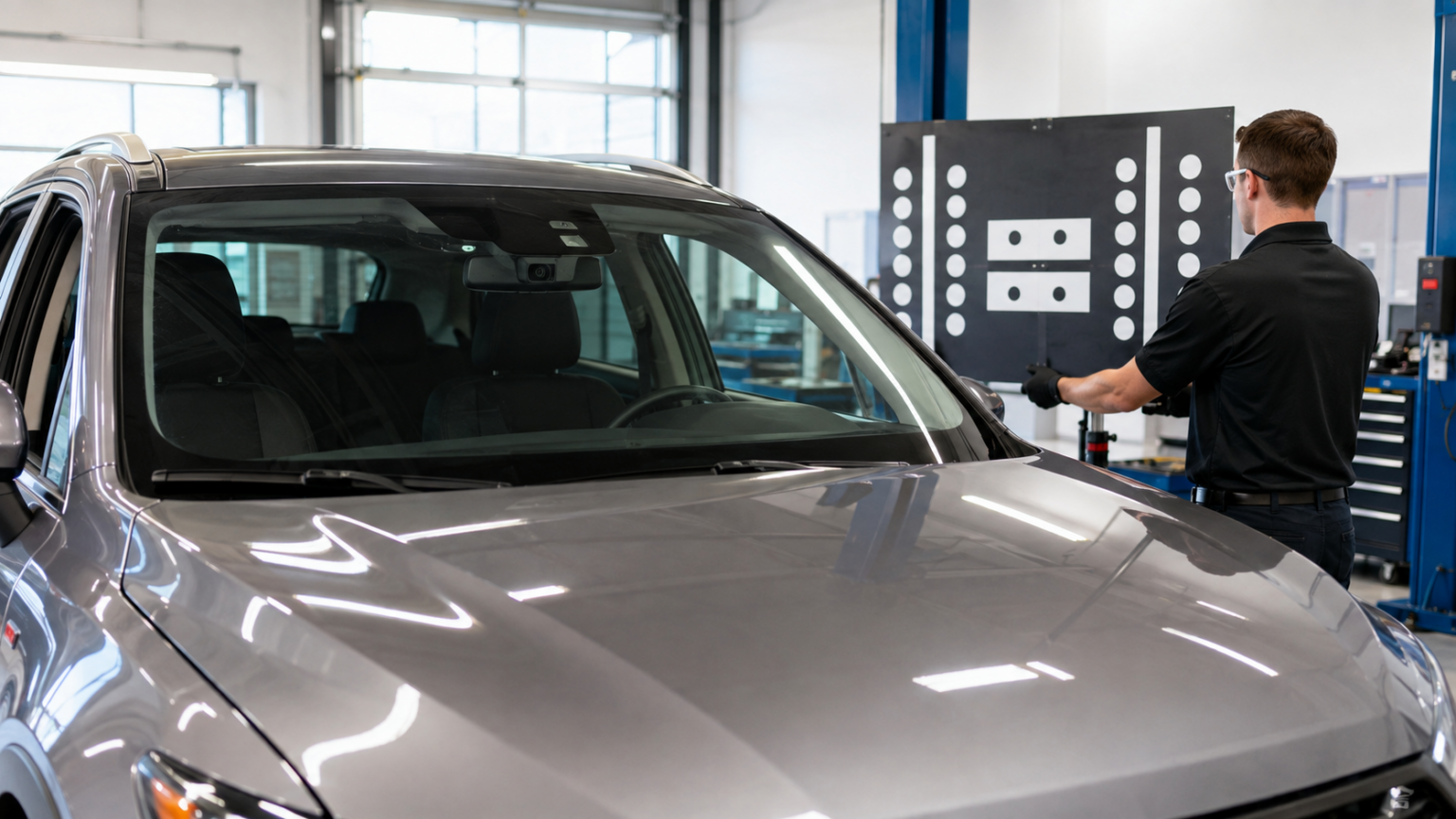
Replacing a windshield on a modern car may involve more than installing new glass. Many vehicles use windshield-mounted cameras for automatic emergency braking, lane assistance, collision warnings, and other safety features. When repairs change a camera or sensor’s position, proper ADAS calibration helps restore the system to the vehicle manufacturer’s specifications.
Advanced driver assistance systems, commonly called ADAS, have become increasingly common across new vehicles. These technologies rely on cameras, radar, ultrasonic sensors, and other equipment to monitor the road. Even a small change in sensor alignment may affect the information these systems use.
For drivers, this makes calibration an important part of modern vehicle maintenance. Understanding when calibration may be needed can help drivers ask better questions after windshield, suspension, alignment, or collision repairs.
Explore more vehicle-related prevention information in our Car Safety resources. You can also read our guide about AI dashcams and road accident prevention.
What Is ADAS?
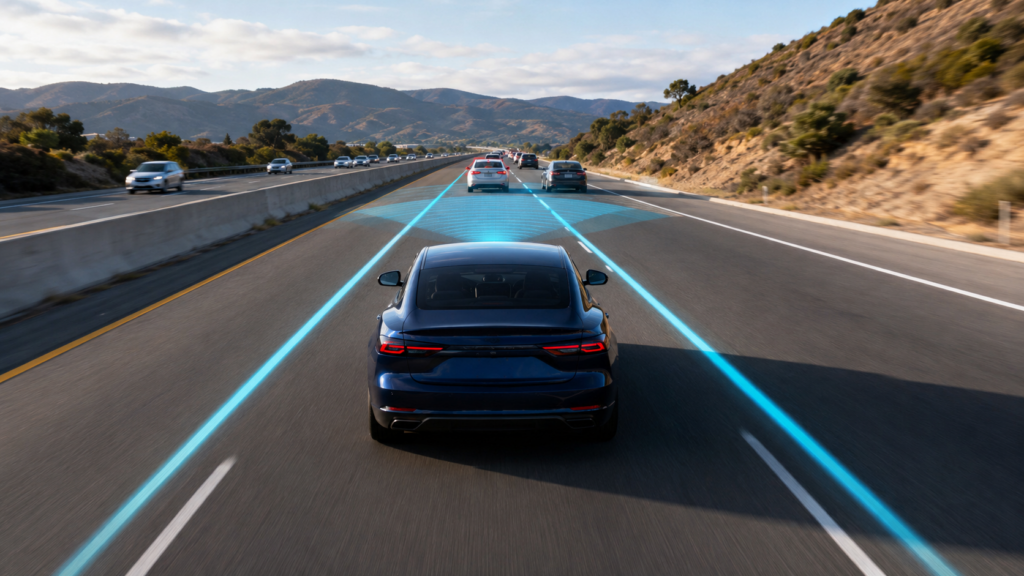
ADAS refers to electronic systems designed to assist drivers with specific driving tasks. Some systems provide warnings. Others may apply the brakes or make limited steering corrections when certain conditions occur.
The National Highway Traffic Safety Administration identifies several common driver assistance technologies. These include automatic emergency braking, lane keeping assistance, blind spot warning, adaptive cruise control, rear automatic braking, and pedestrian detection.
These features do not replace an attentive driver. Drivers remain responsible for controlling the vehicle and responding to changing road conditions.
Many ADAS features depend on accurate information from sensors positioned around the vehicle. A forward camera may sit behind the windshield. Radar units may be located behind the grille or bumper. Other cameras may appear inside mirrors or around the vehicle body.
Why Windshield Replacement Can Affect ADAS
A windshield-mounted camera looks through a specific area of glass at a carefully controlled angle. Removing the windshield may disturb the camera, its mounting bracket, or its relationship with the vehicle.
The replacement glass can also affect the camera’s view if installation does not match the vehicle manufacturer’s specifications.
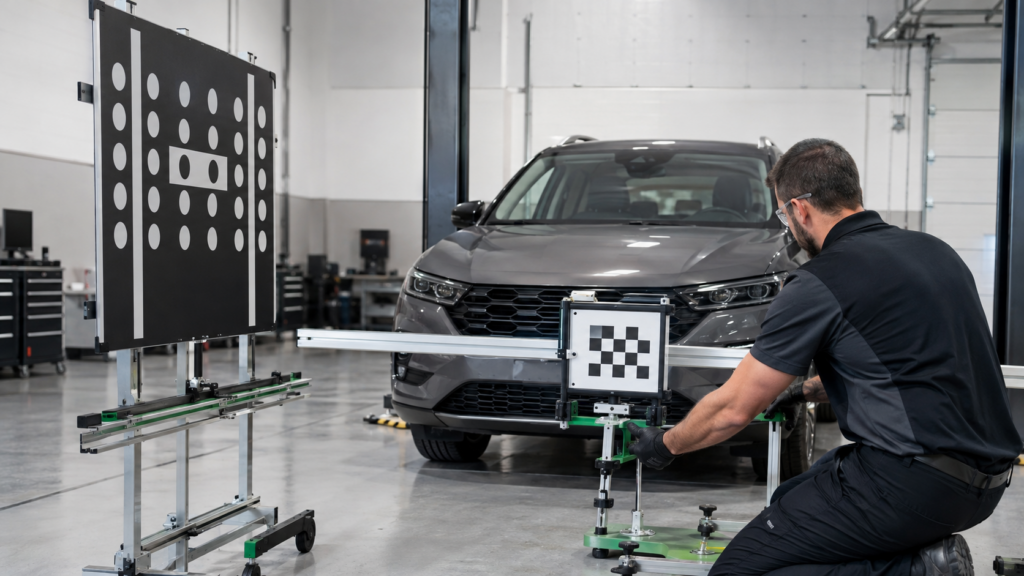
Calibration checks the camera’s alignment and helps the vehicle understand where the sensor is positioned relative to the road.
The American Automobile Association explains that calibration may be needed whenever sensor aiming changes. Windshield replacement is one common reason.
Other situations may include collision repairs, suspension work, wheel alignment, sensor replacement, body repairs, or changes to certain vehicle components.
What Happens If a Camera Is Misaligned?
A camera does not need to appear visibly crooked to have an alignment problem. Small positioning differences may change how the system interprets lane markings, traffic, pedestrians, or objects ahead.
A misaligned system may produce inaccurate warnings. It might respond later than expected, activate when no hazard exists, or become unavailable.
For example, lane keeping assistance relies on information about the vehicle’s position between road markings. Automatic emergency braking may use camera and radar information to evaluate traffic ahead.
The Insurance Institute for Highway Safety reports that several crash avoidance technologies reduce the types of crashes they target. Their benefits depend partly on functioning cameras, sensors, software, and related components.
ADAS Calibration Is Not Limited to Windshields
Drivers sometimes associate calibration only with windshield cameras. Modern cars may contain sensors throughout the vehicle.
A radar unit behind a bumper can support adaptive cruise control and automatic emergency braking. Cameras inside side mirrors can assist with around-view monitoring. Ultrasonic sensors commonly support parking assistance.
Repairs around these components can change their position or orientation.
AAA notes that calibration requirements may arise after a minor collision, wheel alignment, suspension repair, sensor replacement, or other work affecting sensor aim.
This means drivers should tell repair facilities about any warning lights or unusual driver assistance behavior after service.
Static and Dynamic Calibration
Manufacturers use different procedures depending on the vehicle and system. Two common approaches are static calibration and dynamic calibration.
Static calibration usually takes place inside a controlled repair facility. Technicians position special targets, reflectors, or measurement equipment at precise locations around the vehicle.
The vehicle must often sit on a level surface. Tire pressures, steering position, vehicle load, lighting, and distances may also need to meet specific requirements.
Dynamic calibration generally involves driving the vehicle under defined road conditions while diagnostic equipment communicates with its systems. Clear lane markings, certain speeds, and specific driving distances may be required.
Some vehicles use both methods.
Because procedures differ, technicians should follow the instructions specified for the exact make, model, year, equipment, and repair.
Why Calibration Standards Are Receiving More Attention
ADAS technology continues to spread across the vehicle fleet. This growth creates greater demand for consistent calibration procedures and documentation.
SAE International is developing a uniform ADAS sensor calibration reporting framework. The project addresses documentation for cameras, radar, lidar, ultrasonic sensors, and related systems.
The effort reflects a larger challenge within vehicle repair. Calibration methods, equipment, documentation, and verification practices can vary among vehicles and repair environments.
Clear records can help repairers and vehicle owners understand whether calibration procedures were completed successfully.
Crash Avoidance Technology Can Reduce Crashes
Calibration matters because ADAS features increasingly contribute to vehicle safety.
Research published by IIHS and the Highway Loss Data Institute in 2026 found that combinations of crash avoidance technologies were associated with lower claim frequencies.
Features studied included automatic emergency braking, lane departure prevention, blind spot monitoring, adaptive headlights, and related systems.
Modern safety technology therefore creates an additional maintenance responsibility. Cameras and sensors need to remain properly positioned after relevant repairs.
Repairs Have Become More Complex
Modern vehicles contain more sensors, cameras, electronics, and sophisticated components than many older vehicles.
An August 2026 IIHS analysis examined the relationship between crash avoidance technology and repair costs. Sensors may increase repair complexity because damaged or replaced components can require calibration.
However, those same technologies can help prevent some crashes from occurring.
This creates an important distinction. Higher repair complexity does not mean the technology provides no safety value. Instead, modern safety systems require appropriate maintenance and repair practices.
What Drivers Should Ask After Windshield Replacement
Drivers do not need to become calibration technicians. They should know whether their vehicle contains windshield-mounted safety equipment.
Before windshield replacement, ask whether the vehicle has a forward-facing camera or other ADAS components attached to the glass.
Ask whether the manufacturer requires calibration after replacement. Drivers can also ask what calibration procedure the repair facility plans to use.
After the work, request documentation showing that required calibration was completed.
AAA’s ADAS repair research advises vehicle owners to understand their safety technologies and request proof that required calibration was performed after repairs.
Watch for Problems After Service
Drivers should pay attention to the vehicle after windshield or collision work.
Possible signs of an ADAS issue include unexpected dashboard warnings, unavailable safety features, repeated false alerts, unusual steering corrections, or lane warnings that seem inaccurate.
A camera image that appears incorrectly positioned may also indicate a problem on vehicles with surround-view systems.
Do not assume a warning automatically means calibration caused the issue. Software, sensors, wiring, road conditions, dirt, weather, or another component may also affect system performance.
If something seems different after repair, contact the repair facility or another qualified service provider for an evaluation.
Keep Cameras and Sensors Clear
Correct calibration does not remove the need for routine care.
Keep the windshield area in front of cameras clean. Remove snow, ice, heavy dirt, and other material that may obstruct a sensor’s view.
Keep radar and exterior camera areas clean according to the vehicle manual. Avoid attaching stickers, accessories, wraps, or equipment over sensor locations.
Drivers should also review their owner’s manual after buying a new vehicle. It explains where sensors are located and what conditions may limit specific safety features.
ADAS Still Requires an Attentive Driver
Even a properly calibrated driver assistance system has limits. Cameras may struggle with poor visibility, damaged lane markings, glare, heavy rain, snow, fog, or unusual road conditions.
Sensor performance also varies by vehicle and technology.
Drivers should keep their hands ready, maintain safe following distances, monitor surrounding traffic, and remain prepared to brake or steer.
ADAS works as an additional safety layer. It does not replace responsible driving.
Protecting Modern Vehicle Safety Systems
Windshield replacement has changed as vehicles have become more technologically advanced. What once involved mainly glass and adhesive may now involve cameras, diagnostic equipment, precise measurements, and calibration procedures.
Drivers can protect these systems by understanding their vehicle’s features and choosing repair facilities capable of following manufacturer procedures. Asking about calibration after windshield, collision, suspension, or alignment work can also help identify necessary service.
Properly maintained ADAS can support safer driving by providing warnings and limited intervention during certain situations. The technology works best when sensors remain correctly positioned and drivers understand its limitations.
Browse our Car Safety articles, explore additional accident prevention guides, or visit AccidentsPrevention.org for more practical safety information.