
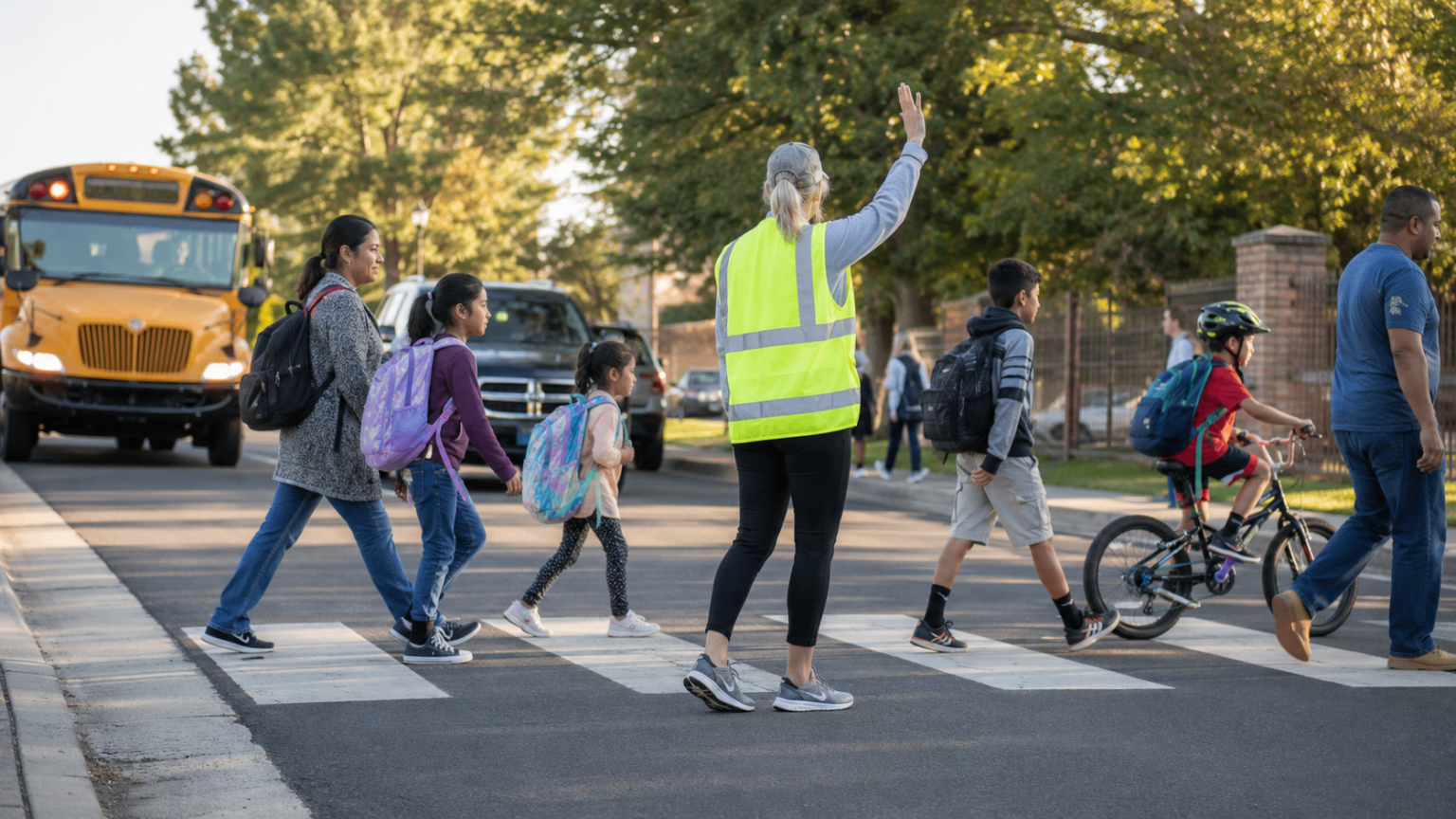
The start of a new school year changes traffic patterns in neighborhoods across the United States. School buses return to their routes, families crowd drop-off areas, students walk and bicycle through intersections, and young drivers begin morning commutes. These changes make back-to-school travel safety especially important for parents, children, motorists, and communities.
Traveling to school may feel routine, but a familiar route can still contain risks. Distracted driving, rushed drop-offs, poor visibility, unsafe street crossings, improperly fitted bicycle helmets, and drivers passing stopped school buses can all create dangerous situations.
Families can reduce many of these risks by reviewing transportation routines before the school year becomes busy. Additional prevention information is available in our Child Safety and Road Safety resources.
Why Back-to-School Transportation Safety Matters
Children may travel to school in several different ways during the same week. A student might ride the bus on Monday, bicycle on Tuesday, walk with friends later in the week, and be driven when the weather changes.
Each method involves different hazards. According to Safe Kids Worldwide’s back-to-school safety guidance, transportation safety should include walking, biking, e-biking, scooters, school buses, vehicle travel, seat belts, and appropriate child restraints.
Instead of teaching only one set of rules, families should help children understand how safe behavior changes depending on how they are traveling.
Practice the Route Before the First Busy Morning
One of the most useful steps parents can take is practicing the school route in advance. Walk, bicycle, or drive the normal route with your child and identify intersections, crosswalks, school entrances, bus stops, driveways, and areas where traffic visibility may be limited.
Point out where children should stop before crossing. Discuss vehicles turning into driveways and parking lots, and identify safe locations where children can wait.
Younger children often need adult supervision because judging vehicle speed and distance develops gradually. Safe Kids Worldwide recommends that children younger than 10 generally cross streets with an adult, recognizing that every child’s development is different.
Teach Safe Walking Habits
Walking to school can provide exercise and independence, but children need consistent pedestrian habits. Encourage students to use sidewalks whenever available and to cross at intersections or marked crosswalks instead of crossing unexpectedly between parked cars.
Before entering the roadway, children should stop and look left, right, and left again. They should continue watching traffic while crossing rather than assuming every driver has seen them.
The National Highway Traffic Safety Administration’s pedestrian safety guidance encourages pedestrians to remain alert and drivers to slow down and prepare to stop near crosswalks, school zones, and areas where children are present.
Phones and headphones can reduce awareness. Students should put electronic devices away while crossing streets and avoid looking at screens near moving traffic.
Make School Bus Stops Safer
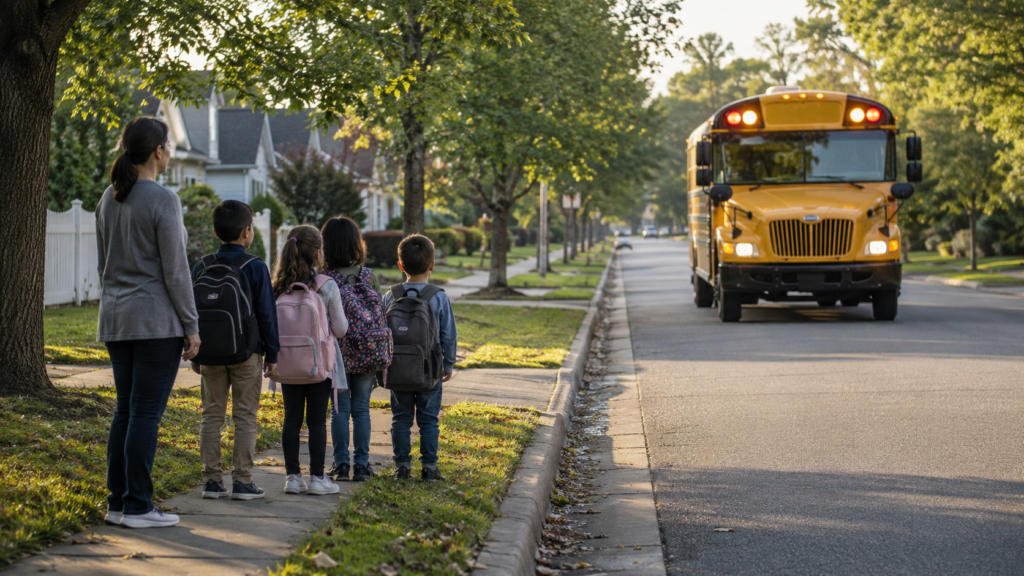
School buses are designed specifically for transporting students, but children can be particularly vulnerable while approaching, leaving, or waiting near the bus.
NHTSA’s school bus safety recommendations advise children to arrive several minutes before the scheduled pickup and wait well away from the curb. Students should avoid running, pushing, or playing near the roadway.
Children should wait until the bus has stopped completely and the driver indicates that boarding is safe. When leaving the bus, they should never walk directly behind it.
If a child must cross in front of the bus, the child should move far enough ahead to remain visible to the driver and make eye contact before crossing. If an item such as a phone or backpack falls near or underneath the bus, the child should tell the driver rather than attempting to retrieve it.
Drivers Must Take School Bus Warnings Seriously
Motorists need additional awareness when school buses return to regular routes. Yellow flashing lights generally indicate that a bus is preparing to stop. Drivers should slow down and prepare to stop.
Red flashing lights and an extended stop arm indicate that students may be entering or leaving the bus. NHTSA notes that every state has laws prohibiting drivers from illegally passing a school bus when the red lights are flashing and the stop arm is extended, although specific roadway rules can vary by state.
The National Safety Council’s school bus crash data also shows why motorists outside the bus remain an important part of school transportation safety.
Drivers should expect children to behave unpredictably near buses. A child might suddenly cross the street, return for a dropped item, or step from behind another vehicle. Slowing down provides more time to react.
Help Children Bicycle to School Safely
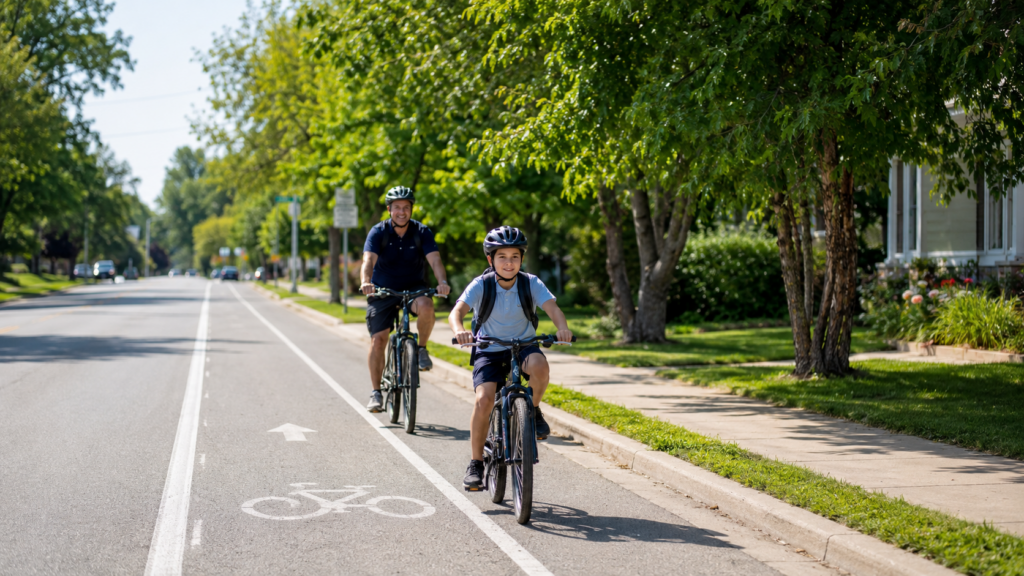
For students who bicycle to school, helmet use should become automatic. A helmet should fit level on the head, sit low on the forehead, and have properly adjusted straps.
The NHTSA bicycle safety guide recommends riding in the same direction as traffic, obeying traffic signs and signals, using available bike lanes, and looking carefully before entering a roadway.
Parents should periodically inspect a child’s bicycle. Check brakes, tires, reflectors, lights, handlebars, and the chain. Make sure backpacks, shoelaces, and loose clothing cannot become tangled in moving components.
Families should also verify that helmets meet appropriate safety requirements. The U.S. Consumer Product Safety Commission explains the federal performance requirements for bicycle helmets and how they are tested.
Consider the Extra Speed of E-Bikes and E-Scooters
Older students increasingly use electric bicycles and scooters for transportation. These devices can travel faster than traditional bicycles, giving riders less time to recognize and respond to hazards.
Students should practice controlling acceleration, braking, turning, and stopping before commuting in traffic. They should understand local rules governing where e-bikes and scooters may be used.
A properly fitted helmet is essential. In April 2026, the CPSC’s Ride Smart safety campaign again emphasized wearing appropriate helmets when riding bicycles, scooters, and e-bikes.
For additional cycling guidance, families can explore our road safety articles.
Make School Drop-Off Zones Less Chaotic
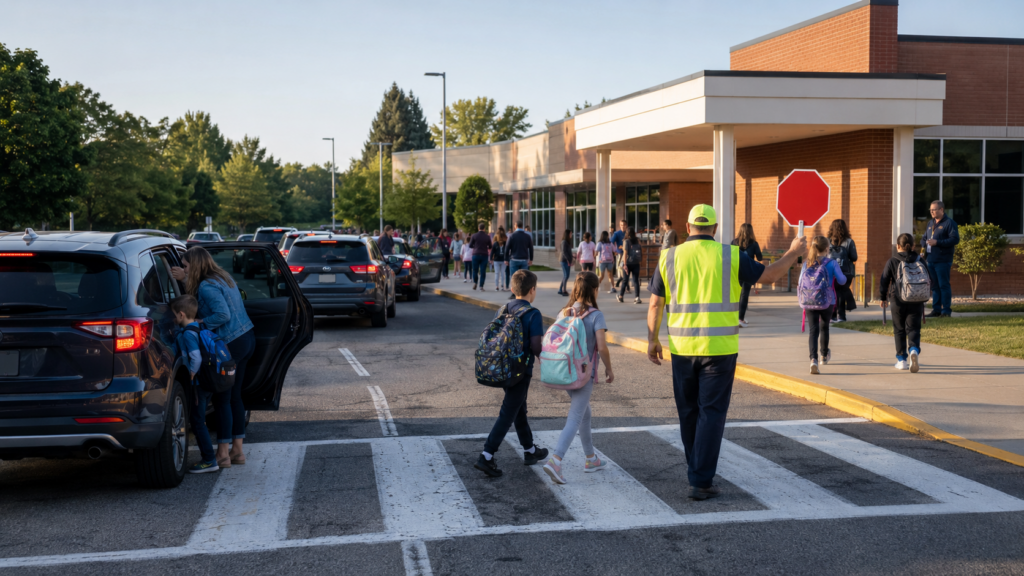
Drop-off and pickup areas can become congested quickly. Drivers may be looking for parking, watching children, responding to messages, and navigating around buses at the same time.
Parents should learn and follow the school’s designated traffic pattern rather than creating a faster route. Avoid double parking, blocking crosswalks, stopping in traffic lanes, or allowing children to exit on the traffic side of the vehicle when a safer curbside option is available.
Children should be ready to leave the vehicle before reaching the unloading point. Backpacks, lunch boxes, instruments, and other belongings can be organized in advance so the vehicle does not remain stopped longer than necessary.
Drivers should put phones away before entering the school zone. Even a brief distraction can be dangerous when children are crossing between vehicles.
Watch Carefully When Backing Up
Parking lots and school driveways create additional risks because children may be difficult to see behind larger vehicles. Rearview cameras and parking sensors can help, but they should not replace direct observation.
Before backing, check mirrors, cameras, and the area around the vehicle. Move slowly and remain prepared to stop immediately.
Drivers should also avoid assuming that another adult is watching nearby children. Everyone operating a vehicle in a school area should independently confirm that the path is clear.
Use Seat Belts and Child Restraints on Every Trip
Whether the drive to school lasts three minutes or 30 minutes, every occupant should use the appropriate restraint.
Children who still require a car seat or booster seat should continue using one that is appropriate for their size and developmental stage. Older children should use the vehicle’s lap-and-shoulder belt correctly.
You can find additional vehicle safety information in our Car Safety category, including guidance about technologies and habits that support safer transportation.
Prepare Teen Drivers for School Traffic
Teen drivers may face particularly complicated conditions near schools. Morning traffic can involve buses, pedestrians, cyclists, parents pulling away from curbs, and other inexperienced drivers.
Parents should practice the school commute with new drivers before allowing them to make the trip independently. Discuss school-zone speed limits, pedestrian right-of-way, bus stopping laws, parking procedures, and phone restrictions.
Teen drivers should leave home early enough that they do not feel pressured to speed or make unsafe maneuvers because they are late.
Adjust the Routine as Daylight Changes
Morning visibility changes as summer transitions into fall. Some students may eventually leave home before sunrise or return during lower-light conditions.
Bright clothing, reflective materials, bicycle lights, and increased driver attention can improve visibility. Families should reassess routes when daylight hours change, construction appears, sidewalks close, or traffic patterns are altered.
Create a Family Back-to-School Safety Routine
Safe school transportation depends more on consistent habits than on a single conversation at the beginning of the year. Review expectations periodically and adjust them as children become more independent.
Ask children about problems they notice on their route. A blocked sidewalk, poorly marked crossing, speeding traffic, or unsafe bus-stop location may require attention from the school or local transportation officials.
NHTSA’s broader Back to School: Keeping Children Safe resource provides guidance for drivers, parents, students, pedestrians, cyclists, and bus riders.
Safer School Trips Start Before Leaving Home
Back-to-school travel safety begins with preparation. Children should know where to walk, how to cross, where to wait for a bus, how to wear a helmet, and what to do when traffic conditions become confusing.
Drivers can contribute by slowing down, avoiding distractions, respecting school bus warnings, yielding at crossings, and following school drop-off procedures. Parents can reinforce safe habits by modeling the same behavior they expect from their children.
As routines settle into place, keep safety conversations going throughout the school year. Small reminders before leaving home can help children develop habits they carry with them long after the first day of school.
Explore more educational resources in our Child Safety section, browse the latest accident prevention articles, or visit AccidentsPrevention.org for practical guidance on safer everyday living.