
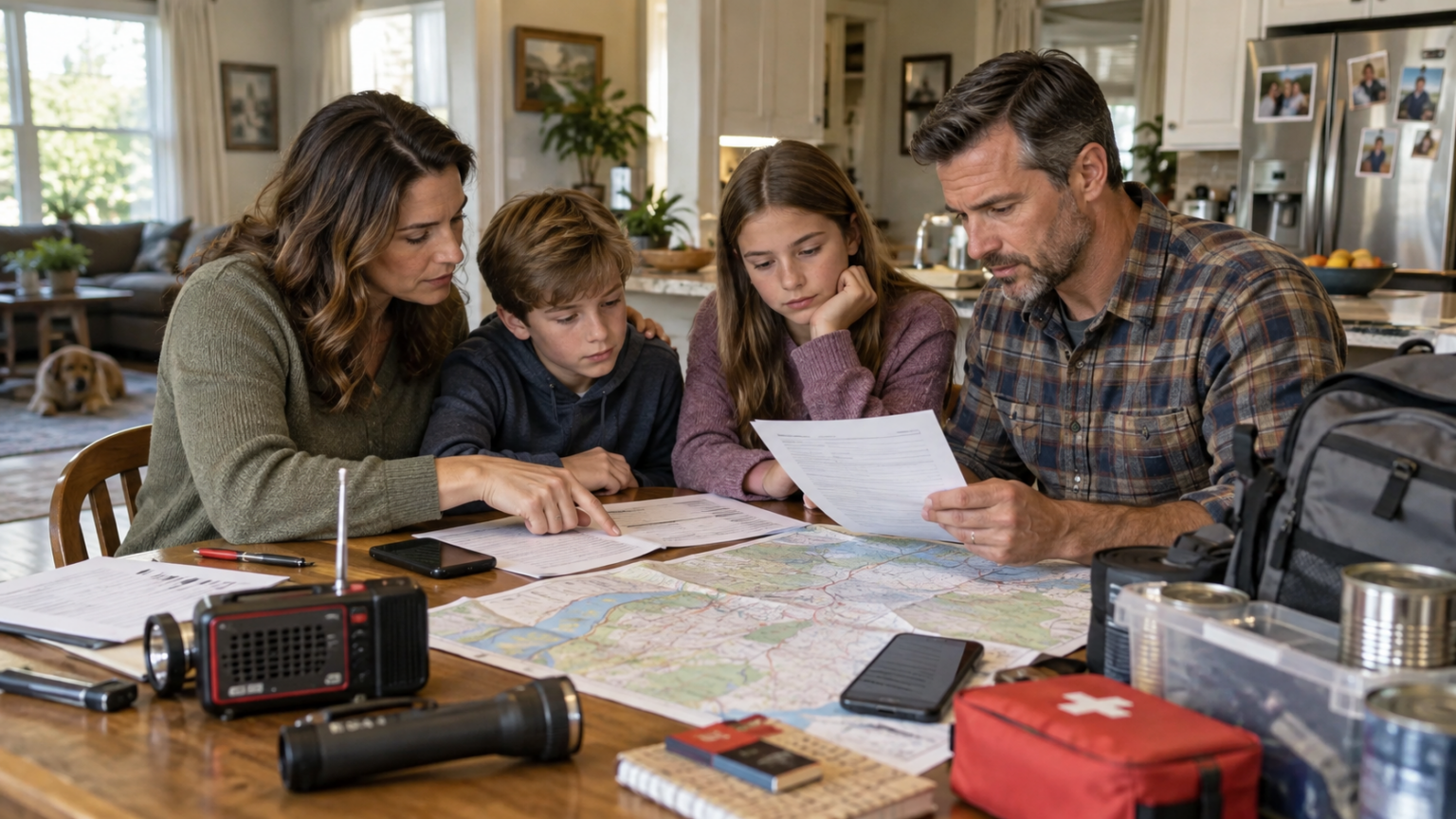
Emergencies rarely happen when every member of a household is conveniently together. A severe storm may arrive while children are at school, parents are at work, and another family member is running errands. Power outages, overloaded cellular networks, evacuations, and damaged infrastructure can make a stressful situation even more confusing.
A family emergency communication plan provides clear instructions for how household members will contact one another, where they will meet, and who will help coordinate information if they become separated. Creating the plan before a disaster allows everyone to focus on safety rather than trying to make important decisions under pressure.
September is National Preparedness Month, making it an ideal time to review household emergency plans. Families can also explore our Emergency Preparedness resources for additional guidance on preparing for unexpected events.
Why Every Household Needs a Communication Plan
Mobile phones make everyday communication easy, but emergencies can disrupt the systems people normally depend on. Electricity may fail, phone batteries can run low, cellular networks may become congested, internet connections may be unavailable, and family members may be unable to return home.
A written plan gives everyone several ways to reconnect rather than depending on one phone number or application.
The Ready.gov Family Emergency Communication Plan recommends collecting household contact information, sharing copies with family members, and practicing the plan regularly.
A useful communication plan should answer several basic questions: Who should we contact? Where should we meet? How will we receive emergency information? What should children do if they cannot reach a parent? How will we communicate if mobile service is unavailable?
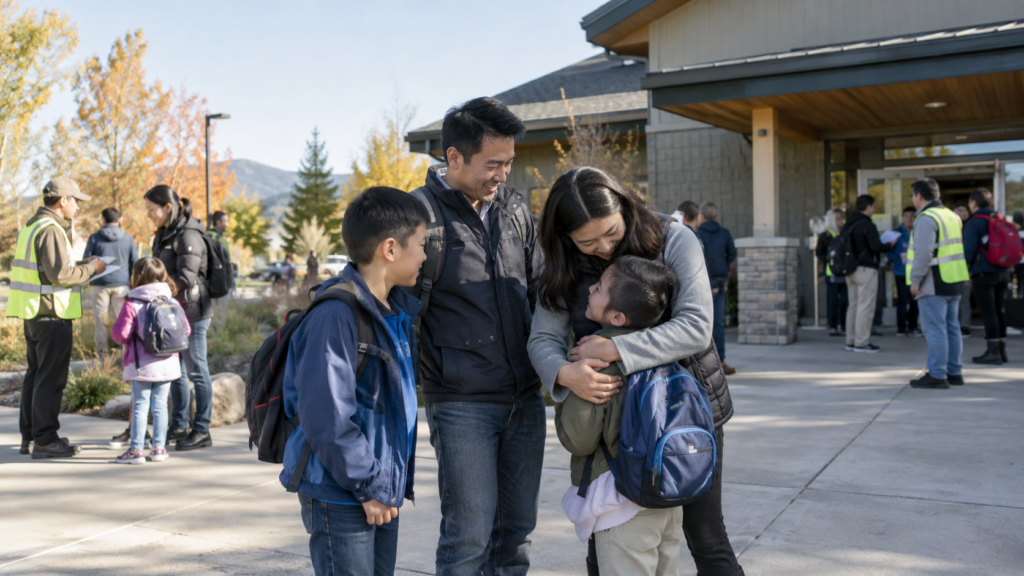
Choose an Out-of-Area Emergency Contact
Select a trusted relative or friend who lives outside your immediate community to serve as the family’s central contact.
During a regional emergency, local phone networks may experience heavy demand. An out-of-area person can receive updates from separate family members and help everyone understand who is safe and where they are located.
Each household member should know the person’s name and phone number. Older children should memorize the number when practical, while younger children can carry a printed emergency contact card in a backpack or school bag.
The American Red Cross emergency planning guidance also recommends choosing an out-of-area contact and ensuring that everyone carries the information in writing as well as storing it on their phones.
Choose More Than One Meeting Place
A single meeting location may not work for every emergency. Families should identify several locations based on different situations.
Choose one meeting place immediately outside the home for emergencies such as a house fire. This might be a neighbor’s driveway, mailbox, or another easily recognized location at a safe distance.
Choose another location somewhere in the neighborhood in case household members cannot return directly home. A library, community center, park, or trusted neighbor’s home may work.
Families should also identify a location outside their immediate community in case an evacuation affects the entire neighborhood.
Make sure every location is accessible to household members with mobility or other functional needs. Families with pets should consider whether the destination can accommodate animals.
Write Important Contact Information on Paper
Phones store hundreds of contacts, which means many people no longer memorize important numbers. That convenience can become a problem when a phone is lost, damaged, inaccessible, or out of battery power.
Create a printed contact list containing household phone numbers, the out-of-area contact, schools, childcare providers, workplaces, healthcare providers, nearby relatives, trusted neighbors, and other important services.
Keep copies in emergency kits, vehicles, backpacks, purses, and wallets. A copy can also be stored in a central location at home.
The CDC recommends planning multiple ways to stay connected and identifying emergency meeting locations before a disaster occurs.
Know the Emergency Plans for Schools and Workplaces
A family plan should connect with the emergency procedures used by schools, childcare centers, workplaces, assisted living facilities, and other places household members regularly visit.
Parents should know how their child’s school communicates during emergencies and who is authorized to pick up the child. Confirm that the school has current phone numbers and emergency contacts.
Children should understand that during an emergency they may need to remain with teachers or school officials until an authorized adult arrives. They should not leave independently simply because they cannot reach a parent.
The CDC’s family reunification guidance recommends choosing meeting locations and giving children emergency contact information they can keep with them.
Use Text Messages When Phone Networks Are Busy
During a widespread emergency, voice calls can contribute to network congestion. A short text message may sometimes be more likely to get through because it requires less network capacity and may be delivered when service becomes available.
Families can agree on short messages such as “SAFE AT SCHOOL,” “AT MEETING PLACE,” or “LEAVING WORK.” Keep messages brief and include useful information about location and condition.
Avoid repeatedly calling family members when networks are congested unless there is an urgent reason. Phones should also be kept charged as long as possible by reducing unnecessary screen use, streaming, and background applications.
Prepare Backup Power for Communication Devices
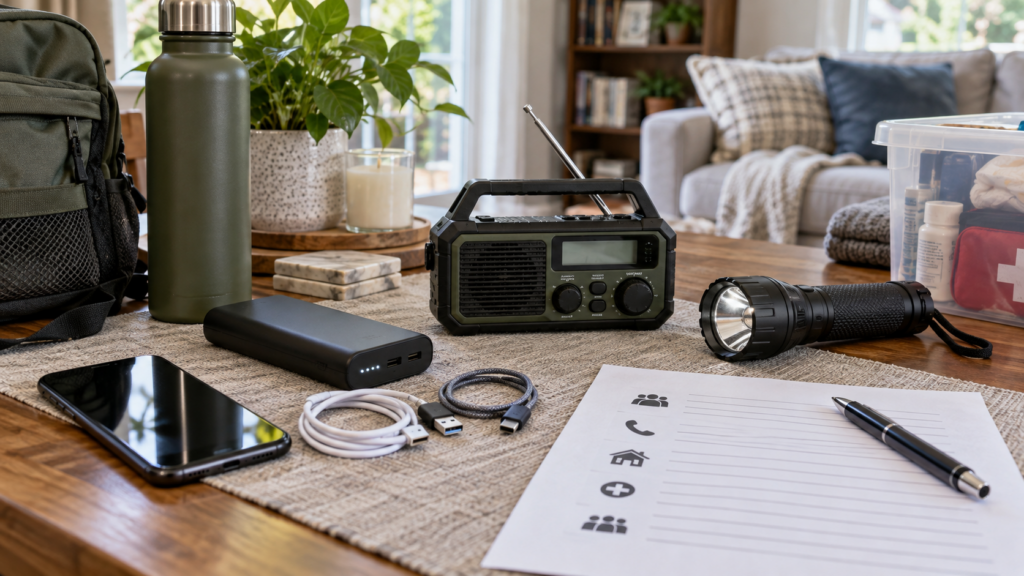
A communication plan can fail if every phone runs out of power. Keep charged portable power banks with emergency supplies and periodically check that they still work.
Include the correct charging cables for household devices. Vehicle chargers may provide another backup option when it is safe to use the vehicle.
Do not depend entirely on smartphones. A battery-powered or hand-crank radio can provide important information if cellular and internet services are disrupted.
Our Emergency Preparedness category includes additional guidance for managing power outages and emergency supplies.
Have More Than One Way to Receive Alerts
Households should use multiple sources for emergency information rather than depending on social media or a single application.
Sign up for local government emergency notifications where available. Enable appropriate emergency alerts on mobile devices and monitor trusted local authorities during developing events.
The FEMA App can provide preparedness information, weather alerts, and shelter information. Families can review its features before an emergency so they are familiar with how it works.
A NOAA Weather Radio offers another communication method when power or cellular service is unavailable. The National Weather Service explains that NOAA Weather Radio broadcasts weather information and emergency warnings around the clock.
Include Children in the Plan
Children should understand the plan without being overwhelmed by frightening details. Explain emergencies in age-appropriate language and focus on simple actions they can remember.
Teach children their full name, home address, and the names of parents or caregivers when developmentally appropriate. Older children may be able to memorize one or two important phone numbers.
Place an emergency contact card in each child’s backpack. Update it whenever phone numbers, addresses, schools, or caregivers change.
Practice what children should do if they cannot reach a parent. Their instructions might be to remain with a teacher, go to a designated neighbor, or contact the family’s out-of-area person.
Plan for Older Adults and People With Disabilities
Emergency communication needs may differ for household members with disabilities, medical conditions, mobility limitations, hearing or vision impairments, or communication difficulties.
The plan should identify caregivers, medical providers, equipment suppliers, transportation assistance, and nearby people who may be able to help.
Consider how an individual will receive warnings if standard audio alerts are inaccessible. Keep necessary communication devices charged and maintain backup power when appropriate.
The CDC’s emergency planning guidance for people with disabilities recommends preparing contact lists, alert methods, supplies, and plans tailored to individual needs.
Include Pets in Emergency Communication Planning
Pets can complicate reunification if family members do not know who is responsible for them. Decide in advance who will retrieve pets when it is safe to do so and what happens if that person cannot return home.
Store veterinarian information, vaccination records, identification details, and emergency contacts with the household plan.
Keep pet carriers, leashes, food, medication, and other supplies accessible. Confirm that microchip registration and identification tags contain current contact information.
Decide What to Do When the Internet Is Unavailable
Many families rely on messaging applications and cloud-based contact lists. These tools are useful, but they should not be the only part of an emergency strategy.
Keep essential information available offline. Printed contact cards, physical maps, written meeting locations, and a battery-powered radio can remain useful when Wi-Fi or mobile data fails.
Download important information to devices in advance when appropriate, but maintain paper backups for essential contacts and instructions.
Practice the Communication Plan
An emergency plan is more effective when household members have actually practiced it.
Run a simple drill several times a year. Pretend that family members are separated and ask everyone which person they would contact, where they would meet, and which information source they would use.
Children can practice retrieving their contact cards. Adults can verify that portable chargers, radios, and emergency notification settings are working.
The Red Cross recommends practicing emergency plans so household members understand their responsibilities before a real crisis occurs.
Update the Plan When Your Household Changes
A communication plan should not remain unchanged for years. Review it whenever someone changes jobs, schools, phone numbers, addresses, healthcare providers, caregivers, or transportation arrangements.
Check printed cards at least once or twice a year. Replace outdated copies in backpacks, vehicles, wallets, and emergency kits.
Also confirm that the designated out-of-area contact is still willing and able to serve in that role.
Make Communication Part of Emergency Preparedness
Food, water, first-aid supplies, flashlights, and batteries are important parts of an emergency kit, but preparedness is also about knowing how people will find one another when normal routines break down.
A family emergency communication plan can be created without expensive equipment. Identify emergency contacts, choose meeting locations, prepare paper copies, arrange backup communication methods, and practice the plan together.
The most useful plan is one that every household member understands and can follow under stressful conditions. National Preparedness Month provides a timely reminder to create or update that plan, but families should keep it current throughout the year.
Explore more practical guidance in our Emergency Preparedness section, browse our latest safety articles, or visit AccidentsPrevention.org for additional accident prevention resources.